Physical Address
304 North Cardinal St.
Dorchester Center, MA 02124
Physical Address
304 North Cardinal St.
Dorchester Center, MA 02124


When I first looked at Vivint, I assumed it was simply another company selling alarms, cameras, and sensors that beep loudly when someone opens a door. That impression changed pretty quickly once I looked at how the company actually connects security, automation, professional monitoring, cameras, climate control, and safety devices into one ecosystem. It positions itself around customized smart home security rather than treating every device as a separate gadget, and that distinction matters when you are trying to protect an actual home rather than simply add a camera to your front porch.
Its current lineup includes security sensors, Vivint security cameras, smart locks, a Smart Hub, professional installation, 24/7 professional monitoring, a motion sensor, a smart thermostat, and a smoke detector(SD) that can also monitor carbon monoxide depending on the device.
What I find particularly interesting is that Vivint’s idea of home security goes beyond the classic question, “Will someone break into my house?” A modern home has plenty of other risks: fire, carbon monoxide, water leaks, unattended doors, extreme temperatures, and even the simple problem of forgetting whether you locked the front door before leaving. This company attempts to bring these different problems into one connected system that can be controlled through its Smart Hub and app.
The result is closer to having a digital command center for your home than owning a collection of unrelated smart devices. That does not automatically make Vivint the right choice for everyone, especially because professional installation and monitoring can make it more expensive than DIY alternatives, but it does make the company worth a serious look if you want a comprehensive system rather than a bargain camera-and-alarm setup.
The easiest way I can explain Vivint is to imagine replacing several independent gadgets with one team that actually communicates with itself. A door sensor can detect an entry event, a motion detection can detect movement inside the house, cameras can provide visual information, and the monitoring service can respond when an alarm is triggered. Meanwhile, the same ecosystem can connect to a smart thermostat, smart locks, lighting, garage controls, and other compatible home-automation products. It’s current product lineup is therefore built around the idea that security and automation should work together instead of living in completely separate corners of your home.
That integrated approach is one of the strongest reasons someone might choose Vivint. Think about what happens when you leave home in a hurry: you want the doors locked, the security system armed, unnecessary lights switched off, and the temperature adjusted. With a fragmented setup, you might need several apps and devices to accomplish those tasks. With this, the objective is to make those interactions part of a single connected environment.
The company also offers professional installation, which means you are not expected to spend your Saturday afternoon staring at a sensor manual and wondering whether you mounted it three inches too high. That convenience is a genuine selling point for homeowners who prefer having someone configure and test the system rather than turning home security into a weekend DIY project.
What makes the ecosystem more interesting is the way individual devices can trigger actions elsewhere. Vivint says its motion sensors can communicate with cameras and the smart thermostat, allowing activity to influence automation such as temperature adjustments, lighting, or camera recording. That means a sensor does not necessarily have to behave like a one-trick alarm component. It can become part of a broader automation strategy where your home reacts to what is happening around it.
This is where the concept becomes much more practical than simply buying “smart” products because the word smart happens to be printed on the box. The real benefit comes from communication between devices. A camera showing you a person approaching your home is useful; a connected security system that can combine that information with sensors, alarms, notifications, and professional monitoring is potentially much more useful. I would still judge any security system by its reliability, cost, coverage, and service terms rather than by flashy automation features, but Vivint’s integrated approach certainly gives it a different personality from a basic standalone alarm.
The basic process is fairly straightforward. Suppose a protected door is opened while your system is armed, or the motion sensor detects unexpected activity. Depending on the configuration, the system can trigger an alarm, send an alert to you, and notify Vivint’s professional monitoring team. It explains that its monitoring specialists can contact you to verify the situation and, when necessary, coordinate emergency response. This creates a layer between the sensor detecting a problem and emergency responders being contacted, which can be particularly useful when you are asleep, traveling, or simply unable to reach your phone.
Another detail I appreciate is the attention to connectivity. Vivint says its systems use cellular backup and battery power so monitoring can continue during certain internet or power interruptions. That matters because a security system that depends entirely on the same Wi-Fi connection that just went offline is not exactly having its finest moment when you need it most. Its monitoring information says the system can remain connected through cellular backup and battery power, while its current security materials also emphasize 24/7 professional monitoring.
Vivint security cameras are one of the most visible parts of the company’s ecosystem, but I would argue that their real value comes from how they fit into the larger system. It is currently offers several camera options, including an Outdoor Camera Pro, Indoor Camera Pro, and Doorbell Camera Pro, giving homeowners different ways to monitor entrances, outdoor areas, and indoor spaces. The company also highlights features such as intelligent detection, notifications, two-way communication, and camera integration with the wider security system.
Outdoor monitoring is particularly important because the front yard, driveway, porch, and other exterior areas are often where homeowners want information before someone actually reaches the door. Vivint’s current Outdoor Camera Pro materials describe a 4K camera with Smart Deter technology designed to detect and deter potential intruders before they reach the home. The Doorbell Camera Pro adds another layer around the entrance, with Vivint describing a 180-degree field of view and detection of people and packages.
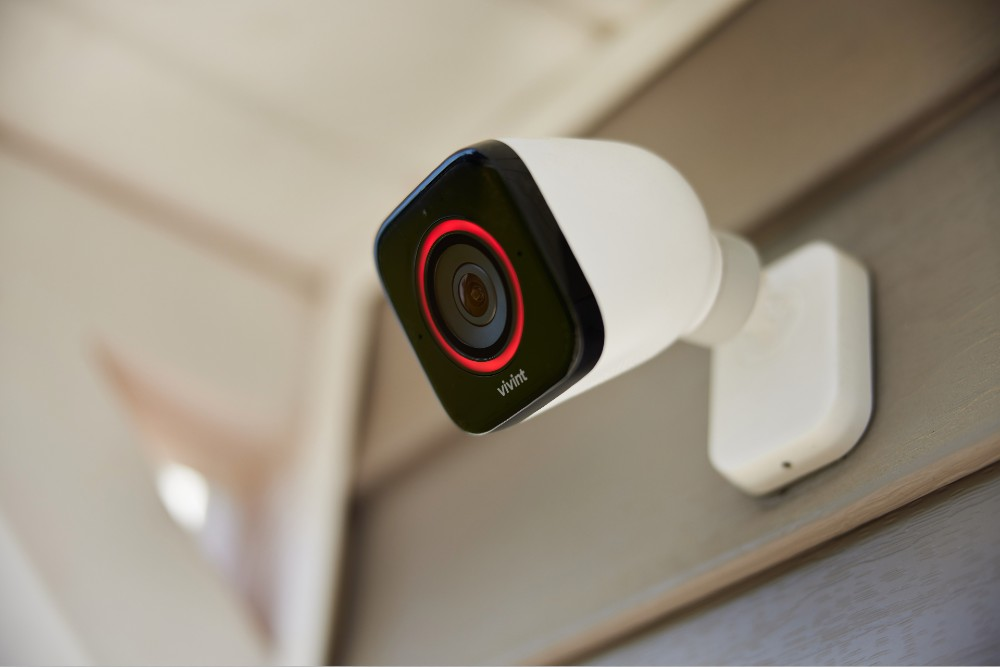
Indoor cameras have a different purpose. They can help you check what is happening inside your home while you are away and communicate through two-way audio. For families, that can mean checking on children, pets, deliveries, or simply confirming that everything looks normal. The important point is that cameras become much more valuable when they are connected to alarms and sensors because video can provide context that a simple alarm cannot. An alarm tells you something happened; a camera may help you understand what actually happened.
A motion sensor sounds like one of those devices that should be extremely simple: detect movement, sound alarm, end of story. Vivint takes the concept further by using infrared technology and designing its motion sensors to integrate with other parts of the smart home. According to Vivint, its current motion sensor can cover an area as large as 40 by 50 feet with a 75-degree field of view, while its pet-sensitive design aims to distinguish pets from people and reduce unnecessary notifications.
The automation possibilities are where I think the device becomes more interesting. It says motion sensors can communicate with its cameras and smart thermostat, allowing detected activity to trigger actions such as recording video or adjusting temperature. The sensor is also battery powered, with Vivint stating a battery life of up to five years under its specified design. For a homeowner, that means the sensor is not merely another alarm component stuck to the wall; it can become part of a larger system that reacts to occupancy and movement.

Here is where Vivint starts looking less like a security company and more like a smart-home company. The smart thermostat is designed to adjust the home’s temperature based on occupancy and routines instead of forcing you to constantly remember to change the temperature manually. Vivint says its Smart Thermostat uses proprietary AI to adjust temperature when you are away and reports average HVAC-runtime reductions of 13%, including 15% less cooling and 11% less heating runtime. The company also says the thermostat can save up to $300 annually in energy costs, although it clearly states that actual savings vary and are not guaranteed.
That disclaimer is important because energy savings depend heavily on the house, climate, HVAC equipment, insulation, household habits, and temperature preferences. I would not buy this company solely because of a potential energy-saving figure. Instead, I would view the thermostat as another part of the ecosystem. The real convenience is having security, occupancy information, and climate control communicate with each other, potentially allowing your home to become more responsive without requiring you to constantly fiddle with settings.
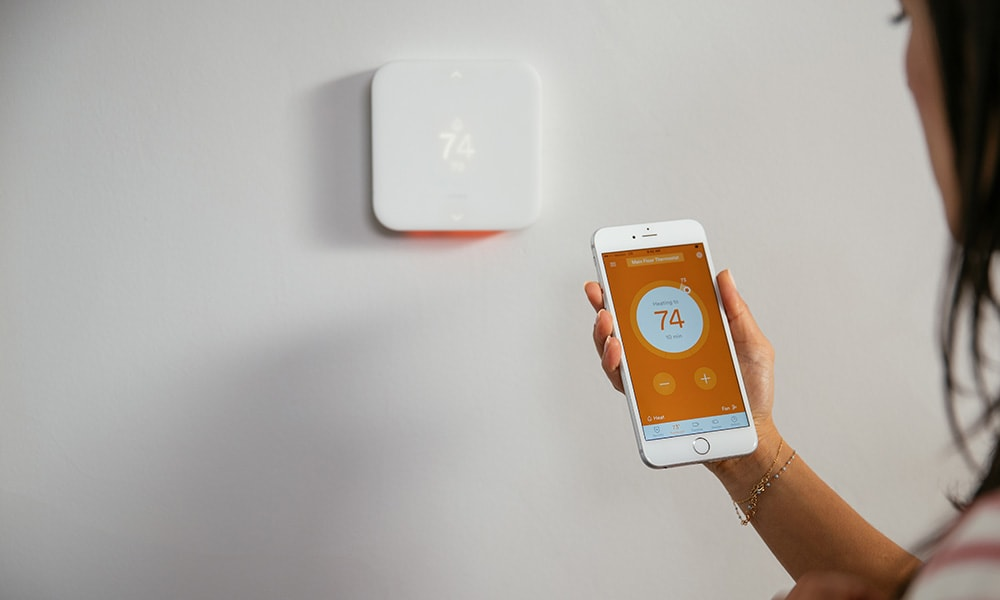
There is also a safety connection that surprised me. It says its Smart Thermostat can work with Vivint smoke detectors to shut down the home’s HVAC system during a fire, helping limit the circulation of smoke and flames through the home’s ventilation system. That means the thermostat is not simply about making your bedroom cooler at night. When connected to the appropriate safety equipment, it becomes another component of a broader emergency-response strategy.
This is a good example of why evaluating individual products can sometimes miss the point of an integrated security system. You could buy a thermostat from one manufacturer, a camera from another, and a smoke alarm from a third. But then you have to determine whether they can communicate properly. Vivint’s pitch is essentially: let one ecosystem handle that relationship for you.
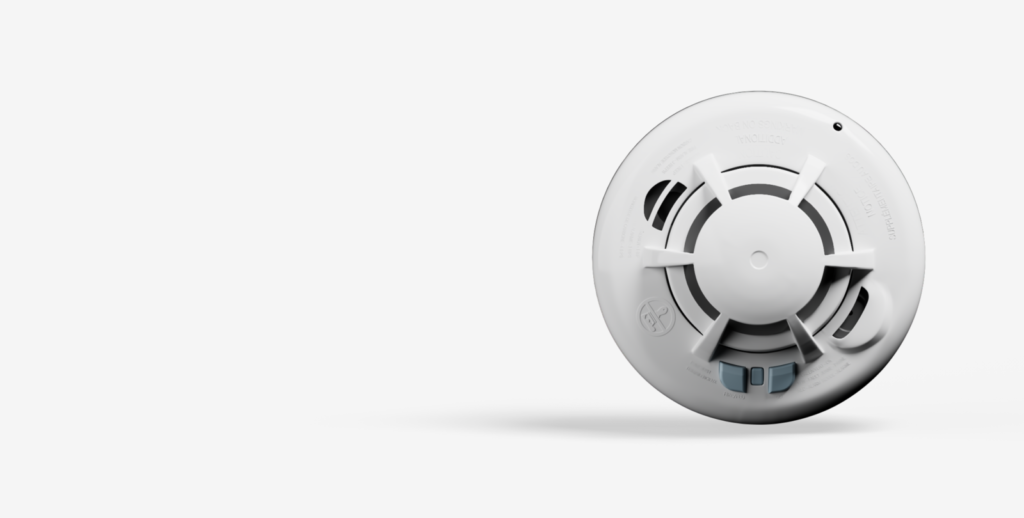
Security is not only about criminals. A house can be threatened by fire, carbon monoxide, water, and extreme temperatures even when the neighborhood is perfectly peaceful. Vivint’s safety lineup includes a smoke detector and carbon monoxide combination detector, as well as water sensors and other safety products. Vivint says its safety alarms connect with the monitoring team, which can coordinate emergency personnel when necessary.
The combination of smoke detection with professional monitoring can be particularly valuable at night or when nobody is home. A conventional smoke alarm can make an extremely important noise, but if nobody is around to hear it, the situation becomes more complicated. A connected system can send notifications and involve a monitoring team, giving the homeowner another layer of response. It also describes integration between its smoke detector and smart thermostat to help shut down HVAC operation during a fire, making this part of the system more interconnected than a standalone detector.
The Vivint Smart Hub is essentially the command center. Rather than making you wander around the house looking for different controls, the hub is designed to let you arm the security system, view camera feeds, communicate through supported devices, and manage connected smart-home functions. Vivint’s current Smart Hub Pro 2 materials highlight features such as two-way talk, battery backup, camera access, security controls, and connections to smart-home devices.
The app extends that control beyond the physical house. If I am away and suddenly wonder whether I locked the door, I want the answer on my phone rather than a 20-minute drive home to investigate. Remote access, notifications, camera viewing, and system controls are useful precisely because life does not happen neatly inside the walls of your home. The whole point of smart security is to give you information and control when you are somewhere else.

One of Vivint’s biggest differentiators is professional installation. Instead of buying a box, downloading an app, and figuring everything out yourself, Vivint’s Smart Home Pros install and configure the system. The company says professional installation includes device setup, compatibility checks, testing, and system training.
I can see both sides of this. If you enjoy technology and installing your own equipment, professional installation may feel unnecessary. If you have a large home, multiple entry points, several cameras, and a complicated automation setup, however, professional installation can save considerable time and frustration. Security equipment is also one of those things where placement matters. A camera pointing at the wrong angle or a sensor installed in the wrong location is technically “installed” but not necessarily doing its job well.
It’s ecosystem extends beyond cameras, sensors, and alarms. Its current product and package information includes smart locks, garage-door control, lighting integration, water sensors, door and window sensors, glass-break sensors, emergency pendants, smart thermostats, and voice-control integrations. You can visit their website and check all their products and services.
This broader range is useful because modern home security is increasingly becoming home automation. A smart lock can provide remote access or temporary codes. A garage controller can let you check whether the garage door was left open. A water sensor can warn about a leak before a small plumbing problem becomes a very expensive flooring problem. Once you look at the system this way, Vivint is not simply selling “security”; it is selling a connected layer of control around the home.
Comparing It with ADT, SimpliSafe, and Ring is tricky because each company has different strengths, pricing structures, equipment choices, installation approaches, and service models. Vivint’s strongest argument is its combination of professional installation, integrated smart-home automation, cameras, sensors, and professional monitoring. SimpliSafe is generally associated with DIY-friendly systems and flexibility, while Ring is particularly attractive to people already invested in its camera and smart-home ecosystem. ADT brings a long-established security brand and multiple service approaches. Current comparison information also shows that the market has become much more flexible than the old “traditional alarm company versus DIY camera” distinction suggests.
For me, the decision would come down to what I actually want from the system. If I want the cheapest way to put a camera beside my front door, It may be excessive. If I want professional installation, 24/7 monitoring, integrated sensors, cameras, climate control, and a single smart-home ecosystem, Vivint becomes much more compelling. The right comparison is therefore not simply “Which company has the cheapest camera?” It is “Which system gives me the combination of protection, automation, service, and convenience I am actually going to use?”
| Feature | Vivint | ADT | SimpliSafe | Ring |
|---|
| Professional installation | Yes | Available | Generally DIY-focused | Generally DIY-focused |
| 24/7 professional monitoring | Yes | Yes | Available | Available |
| Smart-home automation | Strong | Strong | Moderate | Strong |
| Security cameras | Yes | Yes | Yes | Strong focus |
| Motion sensors | Yes | Yes | Yes | Yes |
| Smart thermostat integration | Yes | Available through ecosystem | More limited | Ecosystem-dependent |
| DIY appeal | Lower | Moderate | High | High |
| Best suited to | Integrated smart-home security | Traditional + smart security | Flexible DIY security | Camera-focused smart homes |
The DIY versus professionally installed debate is ultimately about convenience, control, and price. DIY systems can be attractive because you can install them yourself, move devices around, and often start with a relatively small equipment investment. They are particularly appealing to renters or technology enthusiasts who do not want a technician visiting the house. Vivint takes the opposite approach by emphasizing professional installation and an integrated system designed around the home rather than simply handing you a box of devices.
I would not call one approach universally better. A tech-savvy renter with a small apartment might have absolutely no reason to pay for a professionally configured ecosystem. A homeowner with a large property, multiple entrances, cameras, environmental sensors, and automation requirements may appreciate having an expert handle the setup. The important thing is to avoid paying for features you will never use. Security is not a video game where collecting every available device gives you a higher score.
The strongest advantage is integration. Instead of treating your camera, alarm, thermostat, door sensors, smoke alarm, and smart lock as independent products, Vivint attempts to make them behave like parts of one system. Professional installation is another major benefit for people who want a ready-to-use solution rather than a weekend technology project. Its 24/7 monitoring service also gives homeowners an additional response layer when alarms occur.
Another benefit is scalability. You can start with core security equipment and add cameras, environmental sensors, smart-home controls, or other compatible devices depending on your needs. Vivint’s current packages demonstrate this approach by combining security sensors, cameras, safety devices, and automation features, while also allowing customers to customize systems.
The biggest concern is cost. Vivint is not necessarily trying to win the “cheapest security system on the internet” competition. Its current published information shows that equipment, installation, and monitoring costs vary by package and offer, and professional monitoring can carry a recurring monthly fee. Vivint currently lists examples including a standard HomeProtect equipment price of $349.99, professional installation at $199, and monitoring at $29.99 per month under specified offer terms, while other current pages list different monitoring starting points depending on the selected system and service.
That means I would never make a purchasing decision based on a single advertised number. Ask for the complete cost: equipment, installation, monthly monitoring, financing terms if applicable, contract requirements, cancellation conditions, taxes, and any additional products you need. Vivint says month-to-month service can be available when equipment is purchased upfront, while financing is subject to approval and specific terms.
Vivint pricing is not one simple universal number because systems can be customized. The company’s current pages show different packages, promotional offers, equipment configurations, installation costs, and monitoring prices. For example, It currently advertises a HomeProtect equipment package at a regular price of $349.99, with professional installation priced at $199 and monitoring listed at $29.99 per month under the specified terms. Another current Vivint page lists professional monitoring starting at $24.99, illustrating why customers should obtain a quote based on the exact system they intend to purchase.
If financing is involved, I would pay special attention to the total amount paid rather than just the monthly figure. A $20-or-$30 monthly payment can sound harmless until you multiply it across several years. Vivint says qualified customers may have financing options that can reach 0% APR for up to 60 months under applicable offers, but approval, terms, and eligibility matter. The safest approach is to ask for the complete written breakdown before signing anything.
For the right homeowner, I think Vivint can make a lot of sense. If you want cameras, alarms, professional monitoring, smart locks, environmental sensors, a smart thermostat, and automation working together, the integrated approach solves a real problem. Instead of spending weeks researching whether five different brands will cooperate with each other, you are buying into one ecosystem designed to connect its components. That convenience has value, especially for people who would rather have a professional configure everything correctly.
But I would not automatically recommend it to everyone. If your primary goal is simply to put one inexpensive camera outside your front door, you can find far simpler solutions. Vivint makes more sense when you are looking for a comprehensive home-protection system rather than a single security gadget. In other words, you should buy Vivint because you want the ecosystem, not simply because you saw a nice-looking camera.
I would put this company near the top of the shortlist for homeowners who want professional installation and 24/7 monitoring and who are interested in connecting security with home automation. It is particularly appealing for people who want several layers of protection, including door and window sensors, a motion sensor, Vivint security cameras, smoke and carbon-monoxide protection, water detection, and smart-home controls. Its current package lineup supports this broader whole-home approach.
It can also make sense for families who value remote visibility. Being able to check cameras, receive notifications, manage smart devices, and interact with the system through the app can make a noticeable difference when everyone is constantly coming and going. The goal is not to turn your house into a high-security bunker. It is to make the home easier to monitor and manage without requiring you to think about every little task.
If budget is your number-one concern, I would compare Vivint carefully against DIY-focused alternatives before making a decision. You may discover that you simply do not need professional installation or an extensive smart-home ecosystem. Someone living in a small apartment, for example, might be perfectly happy with a simpler collection of sensors, cameras, and self-monitoring features.
I would also look elsewhere if you strongly prefer owning equipment from multiple brands and controlling everything through your preferred smart-home platform. Vivint’s ecosystem is a strength when you want integration, but people who enjoy building a custom setup from many manufacturers may prefer a more open-ended DIY approach. The best system is ultimately the one you understand, maintain, and actually use.
If I were setting up a typical family home, I would start with the fundamentals rather than immediately filling every room with gadgets. I would want door and window sensors covering important entry points, a motion sensor positioned to monitor a major interior area, and a doorbell camera covering the primary entrance. I would then consider an outdoor camera for the driveway or another vulnerable area and an indoor camera only where there is a genuine reason for interior monitoring.
Next, I would add the safety layer: a smoke detector with carbon-monoxide protection where appropriate, water sensors near vulnerable plumbing or appliances, and professional monitoring. Only after those essentials were covered would I add automation such as a smart thermostat, smart locks, lighting, or garage control. That order matters because I would rather have five well-positioned and useful devices than fifteen expensive gadgets that make my house look like it belongs in a technology showroom but do very little for my actual security.
After looking closely at the current product lineup, I think the most accurate way to describe Vivint is this: it is a comprehensive smart-home security ecosystem rather than simply an alarm company. Its combination of professional installation, 24/7 monitoring, cameras, sensors, environmental protection, automation, smart locks, climate control, and centralized management gives it a strong proposition for homeowners who want a complete solution.
What I like most is the philosophy behind connecting everything. A motion sensor can interact with cameras and automation. A SD can work with the smart thermostat during a fire. Cameras can give visual context to security events. The Smart Hub and app bring these functions together, while professional monitoring provides another layer of response.
The catch is that a comprehensive system comes with comprehensive costs. It deserves to be compared with ADT, SimpliSafe, Ring, and other providers based on the complete package rather than one advertised monthly price. If you want maximum DIY flexibility and minimal recurring costs, another company may suit you better. But if what you really want is to stop juggling separate gadgets and have one professionally installed ecosystem watching over your home, Vivint is absolutely worth investigating.
1. What is Vivint mainly used for?
Vivint provides smart-home security and automation products, including security sensors, cameras, professional monitoring, smart locks, thermostats, smoke and carbon-monoxide detectors, water sensors, and centralized controls. Its goal is to connect these products into one home-security ecosystem.
2. Does Vivint offer 24/7 professional monitoring?
Yes. It offers 24/7 professional monitoring, with monitoring specialists responding to alarm events and coordinating emergency assistance when needed. Current pricing depends on the selected system and service plan.
3. Are Vivint security cameras worth adding?
They can be worthwhile if you want cameras integrated with the rest of your security system. It offers indoor, outdoor, and doorbell camera options, allowing homeowners to combine video surveillance with sensors, alerts, and other smart-home functions.
4. Does Vivint have a smart thermostat?
Yes. The Vivint Smart Thermostat can automatically adjust temperature based on occupancy and routines, and It says it can integrate with its security system and smoke detectors. The company estimates potential energy savings, but actual results vary by household.
5. Is Vivint better than DIY home security?
That depends on what you value. It is particularly attractive if you want professional installation, professional monitoring, and an integrated ecosystem, while DIY systems can be better for people who prioritize lower upfront costs, flexibility, and self-installation.

Share your details, and we will get back to you shortly!
This will close in 0 seconds
Share your details, and we will get back to you shortly!
This will close in 0 seconds






[…] 7 Things I Didn’t Know About Vivint Until I Looked Closely at Its Powerful Smart Home Security Sys… […]