Physical Address
304 North Cardinal St.
Dorchester Center, MA 02124
Physical Address
304 North Cardinal St.
Dorchester Center, MA 02124


Your bedroom should be the easiest room in your home to relax in, yet it can somehow become the place where yesterday’s clothes, unopened packages, tangled chargers, random receipts, books, shoes, and that mysterious chair covered in clothes all gather for a meeting. I know how quickly this happens. You put one shirt on the chair because you are tired, leave one bag beside the bed because you will deal with it tomorrow, and suddenly the room looks as if it has been preparing for a small-scale invasion.
That is exactly why good bedroom organization ideas should not focus only on making a room look attractive for a photograph. The real goal is to create a bedroom where you can easily find things, put things away, move around comfortably, and relax at the end of the day.
A good system also needs to match the way you actually live. If you regularly wear certain clothes, keep them accessible instead of hiding them at the back of a cupboard. If you use your phone, glasses, book, or water bottle every night, create a proper place for them rather than letting your bedside table become a miniature archaeological site. Research from UCLA has associated perceptions of clutter and stressful home environments with stress-related patterns, while current bedroom guidance from the Sleep Foundation recommends reducing clutter and making practical use of vertical and under-bed storage. The point is not to create a showroom. It is to build a room that quietly makes your everyday life easier.
A tidy bedroom changes the way the room functions. When the floor is clear, you can walk around without stepping over shoes. When your clothes have logical homes, getting dressed becomes faster. When your bedside area is controlled, you are less likely to spend five minutes looking for your glasses when you are already half asleep. These sound like tiny improvements, but organization is really the accumulation of small conveniences. Think of your bedroom as a personal operating system: when everything has a sensible place, fewer things require your attention.
This is also why simply buying attractive baskets and room storage boxes does not automatically solve the problem. Room storage can hide clutter without actually reducing it. You can place twenty random objects into a beautiful box and technically have a cleaner-looking shelf, but you still have twenty random objects waiting to cause confusion later. Effective organization combines room decluttering, storage, accessibility, and routine. You want the room to naturally encourage good habits rather than constantly requiring you to fight against your own environment.
Before moving furniture or ordering organizers online, ask yourself a surprisingly useful question: What do I actually use this bedroom for? Maybe you sleep, get dressed, work on your laptop, read, exercise, store clothes, or all of the above. If your bedroom doubles as an office, for example, you need a clear boundary between work equipment and sleep-related items. If you mostly use it for sleeping and dressing, your organization can be much simpler.
Take five minutes and identify the activities that happen in the room every day. Then organize around those activities. The things you use constantly should be closest to where you use them, while rarely used possessions can move into less accessible room storage. This simple principle prevents one of the biggest organization mistakes: putting things wherever there happens to be an empty space rather than giving them a logical destination.
The first step is not buying anything. It is room declutter. If your bedroom contains things you do not use, love, need, or even remember owning, no storage system will save you forever. You will simply create a more sophisticated system for storing unnecessary possessions. Start with the floor, then the bed, then visible surfaces, and finally drawers and cupboards. Work in one area at a time so the entire room does not become even more chaotic halfway through the process.
Imagine opening your wardrobe and finding clothes you have not worn in two years, three broken hangers, an old backpack, and six shirts you forgot existed. Your first instinct might be to buy another wardrobe organizer. Instead, remove the things that are no longer serving you. Separate possessions into categories such as keep, donate, repair, relocate, and discard. You do not need to become aggressively minimalist; the objective is simply to stop treating every object as if it deserves permanent real estate in your bedroom.
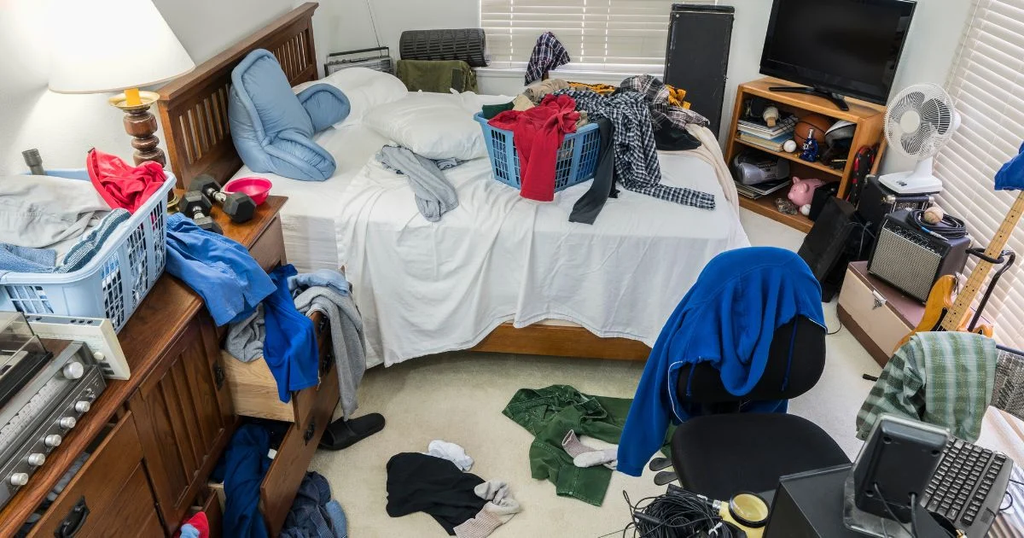
When you are unsure about an item, ask yourself four questions: Do I use it? Do I need it? Would I buy it again today? Does keeping it justify the space it occupies? The last question is particularly useful because physical space has value. A large box of old items might be emotionally difficult to remove, but if you have been moving that box from one corner to another for five years, its usefulness deserves another look.
Try a realistic scenario. You find a pair of shoes you have not worn for two years because they are uncomfortable. You keep them because they were expensive. That is understandable, but the money has already been spent. Keeping uncomfortable shoes does not recover the money; it simply converts your bedroom into their long-term parking lot. If something is genuinely sentimental, keep it intentionally. If something is simply difficult to throw away because of guilt, give yourself permission to let it go.
One of the most powerful bedroom organization ideas is also one of the simplest: everything needs a home. Your keys should have a place. Your laundry should have a place. Your everyday shoes should have a place. Your cables should have a place. Your books should have a place. Even the things that seem too small to matter eventually become clutter when they have nowhere to go.
This does not mean every object needs a luxurious container with a printed label. Sometimes the best solution is incredibly basic. A small tray can hold your watch and keys. A laundry basket can eliminate clothes from the floor. A drawer divider can separate socks and accessories. A hook beside the wardrobe can hold tomorrow’s outfit. The important thing is that putting something away should be easier than leaving it somewhere random.
If you regularly drop your clothes on a chair, do not simply tell yourself to stop doing it. Ask why the chair has become the default storage location. Maybe your wardrobe is difficult to access. Maybe there are too many clothes inside. Maybe the chair is closer to your bed than the wardrobe. Organization works best when you solve the behavior behind the mess instead of blaming yourself for having the behavior.
Good room storage does not always need to be visible. In fact, hidden room storage can be one of the easiest ways to make a bedroom feel spacious without removing useful possessions. Under-bed containers, storage benches, ottomans, drawers, wardrobe organizers, and boxes on high shelves can all hold things that you need but do not need to see every day.
The trick is to use hidden storage for infrequent or seasonal items, rather than objects you use constantly. If you put your everyday socks underneath the bed, you will eventually become annoyed with your own organization system. Use the easiest-to-reach spaces for the things you use frequently and reserve harder-to-reach spaces for luggage, winter clothing, spare bedding, sentimental objects, or occasional-use accessories.
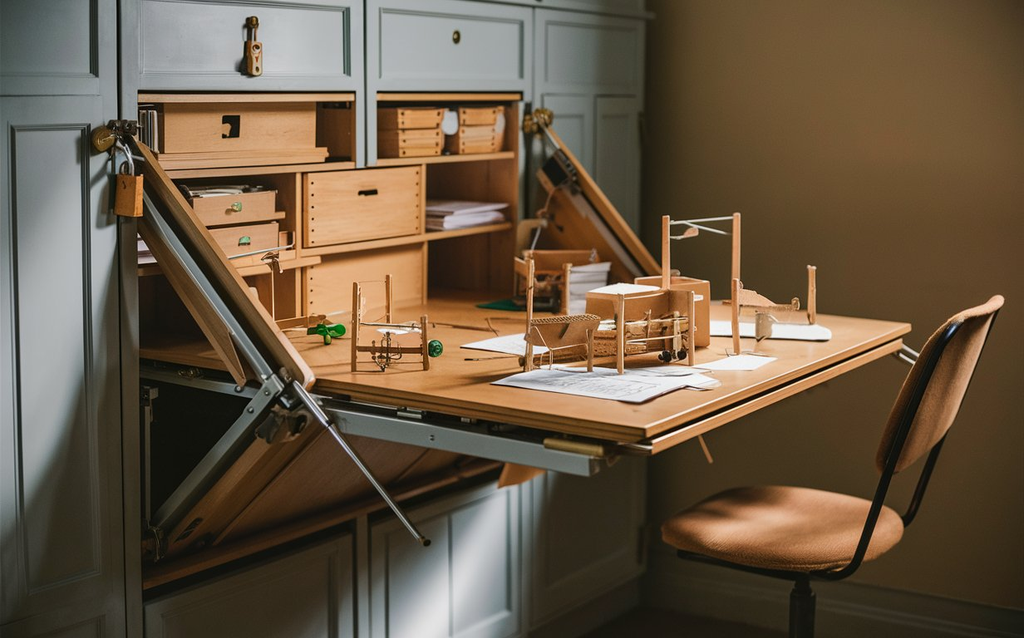
Under-bed space is particularly useful in smaller bedrooms because it converts an otherwise unused area into practical storage. The Sleep Foundation specifically recommends considering under-bed storage and vertical space when trying to free floor space in a bedroom.
For example, you could use flat containers for seasonal clothing, spare sheets, blankets, or travel accessories. Avoid putting damp clothing, fragile objects, or anything that could be damaged by dust into an unprotected space. If your bed has drawers, use each drawer for a category rather than throwing everything together. One drawer could contain spare bedding, another seasonal clothing, and another luggage-related accessories.
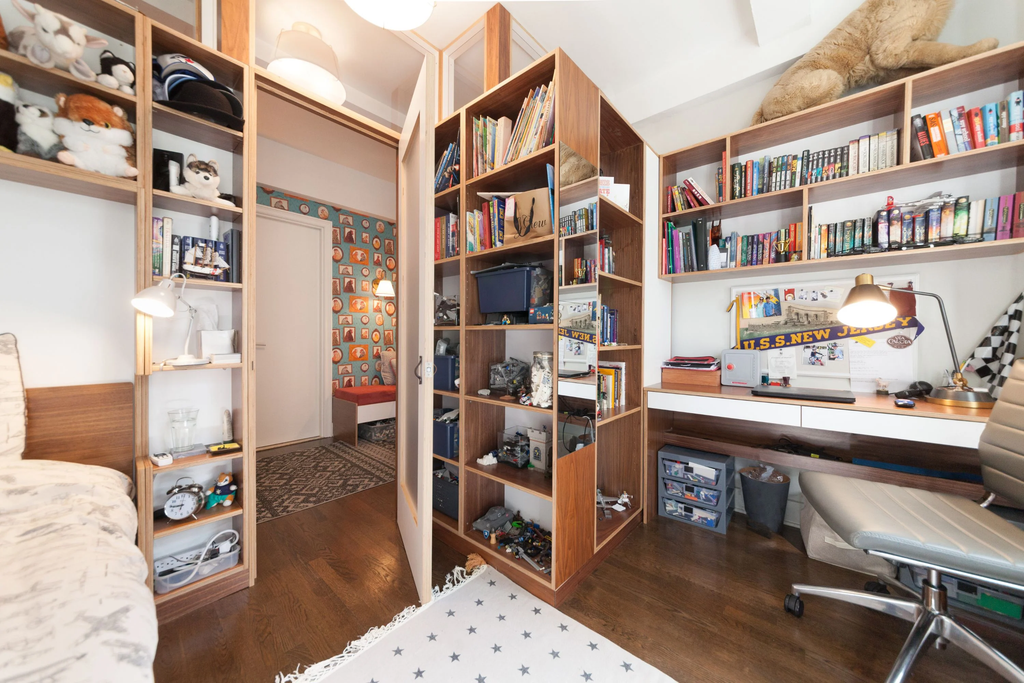
If your bedroom floor is crowded, look up. Vertical space is often one of the most overlooked resources in a small bedroom. Walls can hold shelves, hooks, hanging organizers, pegboards, mirrors, and carefully selected decorative pieces without consuming the floor area required by another cabinet or table.
Imagine a small bedroom where the floor already contains a bed, wardrobe, desk, and chair. Adding another storage cabinet may make the room feel even tighter. A narrow wall shelf above the desk could provide space for books and small items without sacrificing walking space. Hooks behind a door can hold bags, scarves, caps, or frequently used accessories. The goal is not to cover every wall with shelves; it is to use available height intelligently.
Vertical room storage also needs visual discipline. If every shelf is packed from edge to edge, the room can still feel cluttered even though the floor is clear. Leave some breathing room. Store similar things together and use attractive containers when necessary. A wall should support your organization rather than become another surface where random objects reproduce overnight.
You can organize every drawer in the bedroom and still make the room look messy if the bed is covered with tangled blankets and clothes. That is why make your bed should become one of the simplest daily rules in your bedroom system. The bed occupies a large percentage of the visual space, so keeping it neat immediately changes the appearance of the entire room.
Making your bed does not have to become a military operation. Straighten the sheets, pull the blanket into position, arrange the pillows, and remove anything that does not belong there. If you are short on time, spend one or two minutes doing the basics. The goal is consistency, not perfection. A 2025 Psychology Today article also describes making the bed as a small routine that can support broader habit formation, although that should not be interpreted as proof that bed-making alone transforms mental health.
There is also a practical benefit: when the bed is made, you are less likely to treat it as a temporary room storage table. Clothes that would otherwise land on the mattress now look obviously out of place. That creates a visual cue to put them away. One tiny habit can therefore support several other habits at the same time.
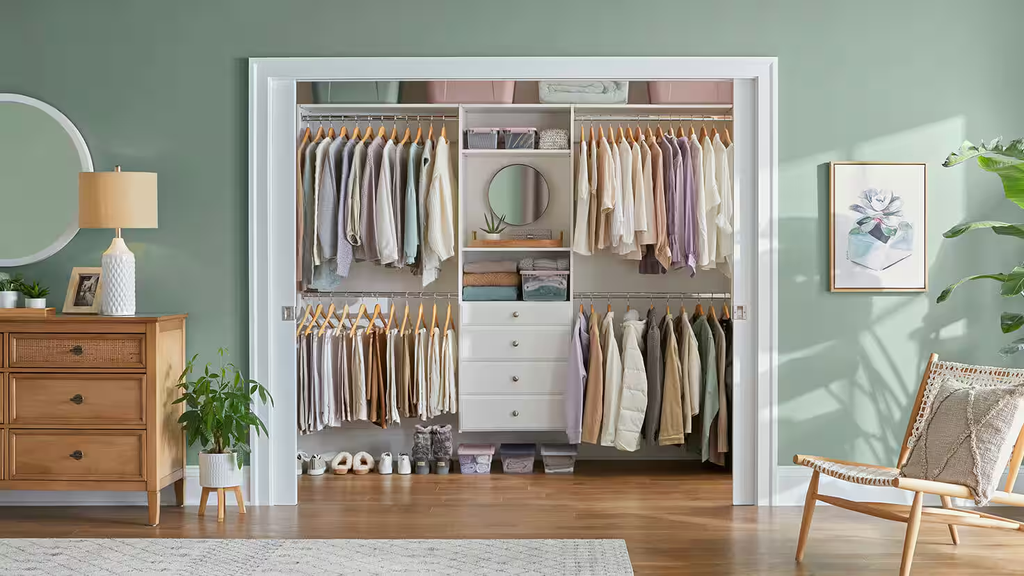
Your wardrobe should not be organized according to an imaginary version of yourself who attends formal dinners every Tuesday. Organize it according to what you genuinely wear. If you wear casual shirts five days a week, they deserve easy access. If you wear formal clothing twice a year, it does not need prime wardrobe real estate.
Group clothing in a way that makes sense to you. You might organize by type, such as shirts, trousers, jackets, and traditional clothing, or by use, such as workwear, casual clothing, exercise clothing, and formal outfits. You can then arrange each category by color if that genuinely helps you. Do not spend three hours color-coding clothes if you still cannot find your favorite shirt.
Create a small area for frequently worn clothing so that your daily routine becomes almost automatic. A dedicated hook, open shelf, or small section of your wardrobe can hold tomorrow’s outfit. A laundry basket should be close enough that dirty clothes actually reach it. If the basket is hidden behind a mountain of furniture, the floor will eventually become the basket.
The nightstand is one of the smallest surfaces in the bedroom but somehow has the ambition of an entire office. Phones, chargers, water bottles, books, receipts, medicine, headphones, glasses, coins, tissues, and random objects can accumulate there very quickly. The solution is not necessarily a larger nightstand. It is a smaller collection of objects.
Keep only what you genuinely need at night or first thing in the morning. A charging cable, lamp, water bottle, glasses case, and current book might be enough. Use a small tray for tiny items so they do not spread across the entire surface. Once a week, remove everything and return objects to their actual homes.
Think of your nightstand as the room’s landing zone, not a storage warehouse. If something has no reason to be there, it should not stay there. This simple rule makes the bedroom feel calmer because one of the first things you see when waking up—and one of the last things you see before sleeping—is controlled rather than chaotic.
The best organization system is the one you can maintain when you are tired. If resetting your bedroom requires an hour every evening, you will eventually stop doing it. Instead, create a short reset routine. Put dirty clothes into the laundry basket, return shoes to their location, clear the nightstand, put away anything that does not belong, and make your bed in the morning.
You can also use the five-minute rule. Set a timer and work only until it rings. You might be surprised how much you can accomplish when the goal is not “clean the bedroom” but “restore the room for five minutes.” This approach removes the psychological weight of a huge cleaning project. You are not trying to achieve perfection; you are preventing small messes from becoming large ones.
Try connecting the reset to something you already do. After brushing your teeth at night, put away five objects. After getting dressed in the morning, put yesterday’s clothes where they belong. When habits are attached to existing routines, they require less mental effort. Your bedroom should gradually become self-maintaining rather than constantly demanding rescue missions.
A beautiful bedroom that is difficult to clean is not particularly well organized. If decorative objects cover every surface, dusting becomes a chore. If furniture blocks access to corners, cleaning underneath it becomes annoying. If clothes are crammed into drawers, putting laundry away becomes a negotiation with gravity.
Leave practical pathways around major furniture. Keep the floor reasonably open. Avoid placing unnecessary objects on surfaces that need frequent cleaning. If you have rugs, baskets, or decorative furniture, make sure they do not interfere with normal movement or cleaning.
Current bedroom guidance from the Sleep Foundation recommends a practical layout, including clear pathways and reduced clutter, as part of creating a more comfortable sleep environment. This is an important distinction: organization is not just about where possessions go; it is also about how easily you can move, clean, sleep, and get ready.
Furniture placement can either support organization or quietly sabotage it. If the laundry basket is on the opposite side of the room from where you change clothes, you are making the correct behavior inconvenient. If your bedside lamp requires you to reach across three piles of books, the setup is asking for trouble. Move things closer to where the action happens.
Lighting matters too. A well-lit wardrobe is easier to use than a dark cupboard where every black shirt mysteriously becomes invisible. Use focused lighting around dressing areas and softer lighting near the bed. The Sleep Foundation recommends a bedroom environment that is dark, quiet, and comfortable for sleep, while also emphasizing practical layout and reduced clutter.
Furniture should serve more than one purpose when space is limited. A storage ottoman can provide seating and hidden storage. A bed with drawers can reduce the need for another cabinet. A wall-mounted shelf can provide display and storage without consuming floor space. The goal is to make every major piece earn the amount of space it occupies.
Small bedrooms require strategy rather than frustration. Start by protecting your walking space. Do not fill every empty corner simply because it exists. Sometimes an empty corner is useful precisely because it allows the room to breathe and makes movement easier.
Use furniture that matches the room’s scale. A giant wardrobe in a small bedroom can create a storage problem rather than solve one. Consider narrow shelves, under-bed containers, over-door organizers, wall hooks, and multi-purpose furniture. Use vertical space whenever possible, but avoid turning every wall into a storage display.
If your bedroom also serves as a workspace, create zones. Your desk should have a defined area, your clothing should have a defined area, and your sleeping area should remain visually simple. Even when a room has multiple functions, visual boundaries can make it feel more organized.
If your bedroom becomes messy again immediately after cleaning, do not automatically assume you lack discipline. The system may be wrong. A wardrobe that is too full, a laundry basket that is too small, inadequate room storage, or inconvenient furniture placement can all create repeated problems.
Watch what happens for one week. Where do objects accumulate? If clothes repeatedly end up on the same chair, that chair is telling you something. If packages always land near the door, create a small landing zone there. If cables pile beside the bed, install a simple cable-management solution. Your recurring mess is data.
The most useful organization systems solve repeated friction. Instead of repeatedly telling yourself, “I need to clean this,” ask, “What makes this area become messy?” That question moves you from temporary cleaning to permanent problem-solving.
If your bedroom currently looks like a storage room that accidentally contains a bed, do not attempt everything at once. Start with a complete room declutter. Remove obvious rubbish, collect dirty laundry, return objects that belong elsewhere, and create piles for things you want to keep, donate, repair, or relocate.
Next, tackle storage. Empty one drawer or cupboard at a time, group similar possessions, and return only useful items. Use under-bed storage for appropriate seasonal or occasional belongings, and use vertical space for items that can be stored safely on walls or high shelves. Once room storage is under control, organize your frequently used items so that the things you reach for every day are easiest to access.
Finally, reset the room itself. Clear the floor, position furniture sensibly, make the bed, organize the nightstand, and remove unnecessary decorations. Then stop. You do not need to keep reorganizing forever. The objective of the weekend is to establish a system that becomes easier to maintain from Monday onward.
One major mistake is buying storage before room decluttering. This is how people end up with containers full of things they do not need. Another mistake is putting frequently used possessions in inconvenient locations. If something takes too much effort to retrieve or put away, you are eventually going to leave it somewhere else.
Another problem is confusing “hidden” with “organized.” A messy drawer is still a messy drawer even if visitors cannot see it. You do not need every drawer to look like a luxury hotel closet, but categories should be clear enough that you can find something without emptying the entire drawer onto the floor.
Finally, avoid copying organization systems simply because they look good online. A perfectly labeled collection of baskets might look fantastic in a photograph but be completely unnecessary for your lifestyle. Your bedroom should reflect your routines, your belongings, your available space, and the amount of maintenance you are realistically willing to do.
Long-term organization depends on controlling what comes into the room as much as controlling what is already there. Before buying something new, ask where it will live. If you cannot identify its future home, that may be a sign that you do not need it—or that something else needs to leave first.
Use a simple one-in, one-out rule for categories that regularly grow. If you buy a new jacket, consider whether an old one should be donated. If you purchase new bedding, decide what happens to the old set. This prevents possessions from quietly expanding until your storage system collapses.
Give yourself a weekly reset rather than waiting for the bedroom to become unbearable. Ten or fifteen minutes can be enough to return the room to baseline. Put clothes away, clear surfaces, empty unnecessary items from the nightstand, check the laundry, and make your bed every morning. Organization becomes dramatically easier when you maintain a small amount of order instead of repeatedly recovering from a large amount of chaos.
The best bedroom organization ideas are not necessarily the most expensive, complicated, or Instagram-worthy. They are the ideas that make your real life easier. Start with a serious room declutter, give everything a home, use practical room storage, take advantage of vertical space, and keep frequently used belongings within easy reach. Then add small habits such as make your bed every morning and performing a short reset at the end of the day.
You do not need a huge bedroom to create an organized one. You need a clear understanding of what you own, what you actually use, and how you move through the room every day. If your clothes always end up on a chair, solve the clothing problem. If your floor is crowded, look upward and underneath the bed. If your nightstand is overflowing, reduce what belongs there.
Most importantly, do not treat organization as a one-day transformation. Think of it as designing a room that works with you rather than against you. A bedroom should help you switch off, get ready, find your belongings, and start the next day without immediately wondering where you left your other sock. That is the real payoff: not perfection, but a room that feels easier to live in.
1. What is the first thing I should do when organizing my bedroom?
Start with a room declutter before buying storage products. Remove rubbish, collect laundry, relocate objects that belong elsewhere, and separate possessions into keep, donate, repair, relocate, and discard categories. Once unnecessary items are gone, you will have a much clearer idea of how much room storage you actually need.
2. How can I organize a small bedroom without making it feel crowded?
Protect your floor and walking paths first, then use vertical space and under-bed storage. Wall shelves, hooks, over-door organizers, and appropriately sized furniture can add useful storage without consuming much floor area. Avoid filling every available surface because visual breathing room is also part of good organization.
3. How often should I declutter my bedroom?
A major room declutter does not need to happen every week. A seasonal review can work well for clothing and other belongings, while a short weekly reset prevents clutter from becoming overwhelming. If you regularly notice the same area becoming messy, treat that as a sign that the storage system needs adjustment.
4. Does making your bed really help with bedroom organization?
Making your bed does not magically organize an entire bedroom, but it creates an immediate visual anchor and can reinforce a morning routine. It also prevents the bed from becoming an obvious dumping surface for clothes and miscellaneous items. The important thing is to treat make your bed as one small habit within a larger organization system rather than a cure-all.
5. Should I buy more storage if my bedroom is always cluttered?
Not necessarily. First determine whether you have too many possessions, poorly designed storage, or inconvenient places for frequently used items. More containers can sometimes hide the problem rather than solve it. Room declutter first, reorganize what remains, and then buy storage only for a specific problem you can clearly identify.

Share your details, and we will get back to you shortly!
This will close in 0 seconds
Share your details, and we will get back to you shortly!
This will close in 0 seconds






[…] 7 Powerful Bedroom Organization Ideas That Can Turn a Cluttered Room Into a Calmer Space […]