Physical Address
304 North Cardinal St.
Dorchester Center, MA 02124
Physical Address
304 North Cardinal St.
Dorchester Center, MA 02124


There was a time when I thought reading personal development books simply meant collecting impressive titles, highlighting half the pages, and then proudly telling myself I was “working on myself.” The reality is a little less glamorous. You can own 50 books, have a Kindle overflowing with ebooks, and still wake up the next morning with exactly the same habits, distractions, doubts, and unfinished plans. The real value of reading comes when an idea leaves the page and starts influencing what you actually do.
That is why I wanted to rebuild this list around something more useful than simply naming popular books. Instead of asking, “Which books should I read?”, I think the better question is, “What problem am I trying to solve?” Current Goodreads shelves show how strongly titles such as Atomic Habits, The 7 Habits of Highly Effective People, How to Win Friends & Influence People, Deep Work, and The Psychology of Money continue to appear in personal-development and self-improvement reading lists.
That distinction matters because personal development is not one giant problem with one giant solution. Maybe you struggle to maintain habits. Maybe your phone destroys your concentration every 12 minutes. Maybe you have ambitious goals but cannot seem to organize your days around them. Perhaps you need better communication skills, a healthier relationship with money, more confidence, or simply a way to stop overthinking everything at 2 a.m. The best books to read depend on which of those situations sounds familiar.
I have therefore expanded the original five-book list into 10 carefully selected titles that cover habits, productivity, mindset, relationships, money, courage, presence, priorities, and personal responsibility. Think of this as a practical bookshelf rather than a popularity contest: you do not need to read every book, and you certainly do not need to finish a book just because someone on the internet called it “life-changing.”
One reason I still find personal development books useful is that they give us something the internet often does not: concentrated thinking. Social media gives you 30-second advice, five-slide carousels, motivational quotes over mountain photographs, and approximately 700 people explaining how successful they became before breakfast. Books can slow that noise down.
A well-written book gives an author hundreds of pages to explain an idea, provide context, challenge assumptions, and show how a principle can work in real life. Research published in Perspectives in Public Health reviewed 43 papers on reading for pleasure and identified mechanisms including relaxation, perspective-taking, intellectual stimulation, self-understanding, empathy, and connectedness. That does not mean reading one self-help book automatically transforms your life, but it does reinforce the broader value of reading as a meaningful activity.
The important part is choosing self improvement material intelligently. I would not recommend treating these books like medicine where you simply swallow one chapter every night and wait for results. Imagine someone who wants to become more productive but spends three months reading productivity books while never changing their calendar. They have essentially turned procrastination into a research project.
A better approach is to read with a question in mind: “How can I stop checking my phone while working?”, “How can I build a consistent exercise habit?”, “How can I communicate better with clients?”, or “Why do I keep abandoning goals after two weeks?” When you have a specific problem, the right book becomes a tool rather than entertainment. That is also why this guide focuses not only on what each book says, but on what you can actually do after reading it.
The biggest mistake I see people make with books to read lists is assuming that more information automatically creates more progress. It does not. Information is raw material; application is the construction process. You can read Atomic Habits and still leave your running shoes buried underneath a pile of clothes. You can read about deep focus while keeping 17 browser tabs, WhatsApp Web, Instagram, email, and YouTube open during every work session. You can read about money while continuing to spend without tracking anything. The book cannot physically reach through the page and remove your bad habits, which is rather inconvenient considering how much we would all like that feature.
A better system is to extract one major idea from every reading session and turn it into one observable behavior. If a chapter tells you to make a habit easier, reduce the friction around it. If it tells you to protect your attention, schedule uninterrupted work. If it discusses relationships, change the way you listen to someone. If it challenges your assumptions, write down one belief you want to reconsider. This turns reading into an active form of personal development instead of passive consumption. You do not need to remember every sentence; you need to remember enough to behave differently.
Choosing among hundreds or thousands of personal development books can become a problem of its own. Goodreads currently lists tens of thousands of books under personal-development-related shelves, while individual popular titles can have hundreds of thousands or even more than a million reader ratings. That is useful because it shows the enormous range available, but it also means “just recommend me a self-help book” is a surprisingly difficult request. If you are struggling with habits, you do not necessarily need a book about vulnerability. If your biggest problem is digital distraction, another motivational book may not solve it. The goal is to identify the bottleneck in your life before choosing the tool.
I like to divide the decision into practical categories. If your problem is consistency, start with habits. If it is concentration, look at deep work and digital minimalism. If you constantly compare yourself with other people, explore mindset, values, and vulnerability. If money creates anxiety or impulsive decisions, choose books that explain financial behavior rather than simply promising wealth. If your relationships are suffering, communication-focused books to read may provide more immediate value. This approach also prevents the common mistake of buying ten ebooks at once because all ten have attractive covers and then finishing none of them.
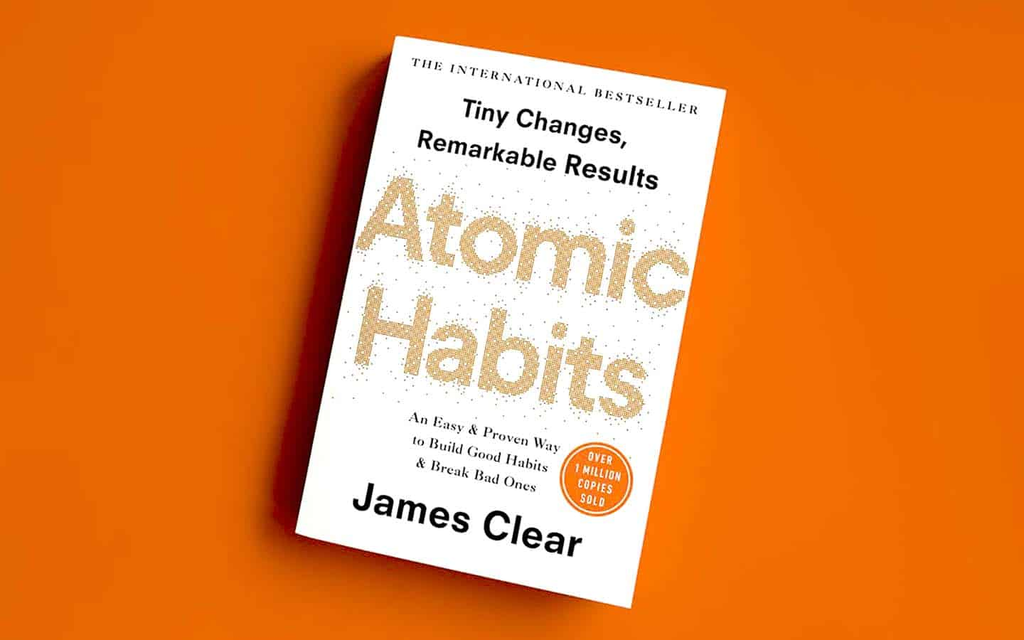
If I had to choose a book that fits the practical side of self improvement, Atomic Habits would be difficult to ignore. James Clear’s book focuses on the idea that meaningful change can emerge from small, repeatable improvements rather than dramatic bursts of motivation. Clear’s official site describes the book as a practical guide to building good habits, breaking bad ones, and getting better through small changes.
His site currently states that Atomic Habits has sold more than 30 million copies worldwide and has been translated into more than 60 languages. Goodreads also currently shows the title with a rating around 4.31 from more than 1.4 million ratings, making it one of the most prominent books on its personal-development and self-improvement shelves.
What makes this useful is that the book encourages you to stop treating your life as a collection of enormous goals and start examining the systems supporting those goals. Suppose you want to read 30 books this year but currently read approximately zero pages on most days. Setting a giant annual target may sound inspiring, but creating a 15-minute reading routine after dinner is much more concrete.
If your phone is the problem, put it in another room while you work. If you want to exercise, prepare your clothes beforehand. If you want to write, open the document before your scheduled writing session. Clear’s official resources also include habit trackers, implementation-intention templates, and a habit-stacking framework, giving readers ways to move from theory into practice.
The lesson I would take from this book is simple: make the behavior easier to repeat before demanding more motivation from yourself. You do not need to become a completely different person on Monday morning. You need to create an environment in which the next useful action becomes easier to perform. Clear’s official website also offers the Atoms app, which is designed around the same habit-building principles and includes reminders, habit tracking, and daily lessons.
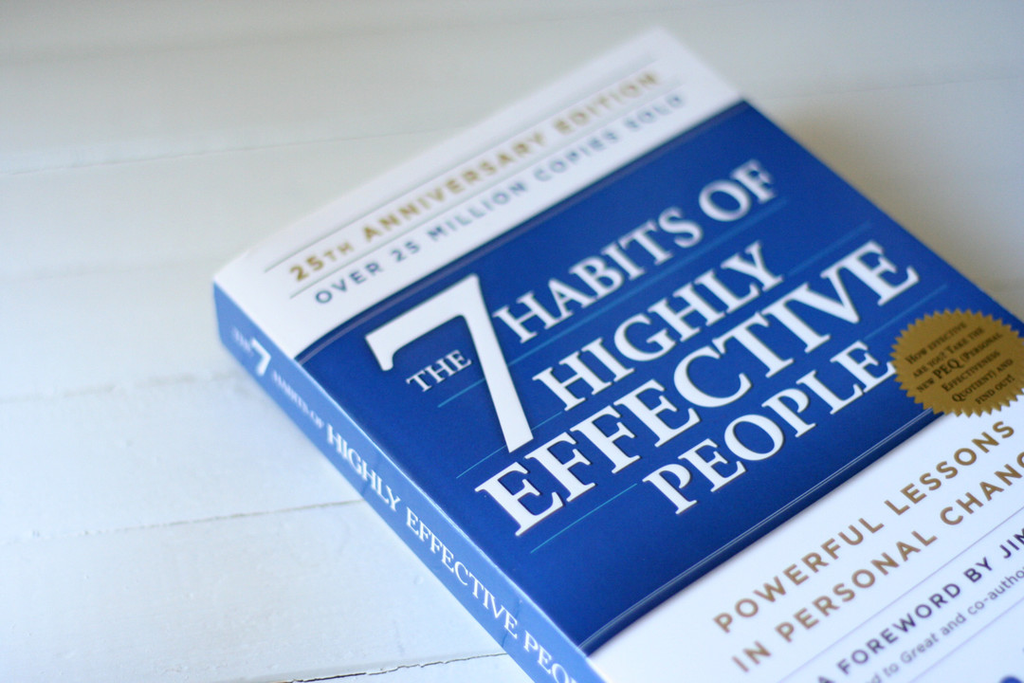
Stephen R. Covey’s The 7 Habits of Highly Effective People belongs on this list because personal growth is not only about productivity. It is also about how you make decisions, manage responsibilities, communicate with people, and determine what deserves your attention. Goodreads currently lists the book among major personal-development and self-improvement titles, with more than 845,000 ratings and an average rating around 4.16. The book’s enduring popularity is partly explained by its broad approach: it does not simply tell you to work faster. Instead, it asks you to think about effectiveness, priorities, relationships, and principles.
The practical challenge is to stop confusing being busy with being effective. Imagine you have answered 60 messages, attended five meetings, refreshed your email inbox 20 times, and spent the evening exhausted—but the project that actually matters has not moved forward. You were busy all day, yet your important work remained untouched. Covey’s framework can be useful here because it encourages readers to examine priorities rather than simply count activities. For me, that makes this one of the better books to read if your problem is not laziness but a calendar that has become the boss of your life.
Try taking one week and dividing your responsibilities into urgent tasks, important tasks, and distractions disguised as urgency. You might discover that some activities deserve a response immediately, while others only feel urgent because somebody else has made them visible. That exercise alone can make personal development much more concrete.
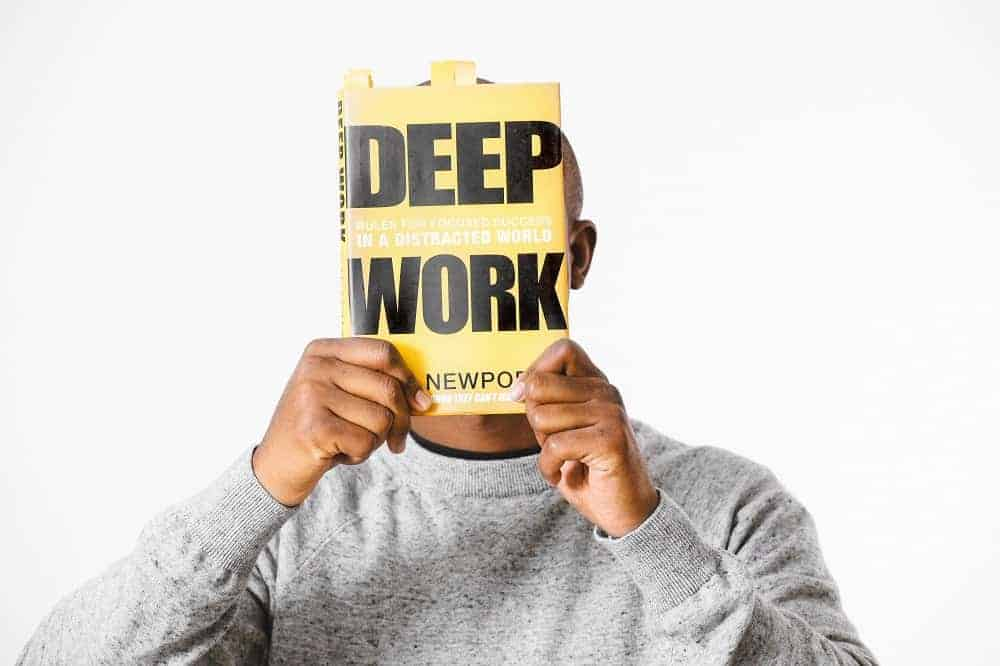
If your biggest enemy is distraction, Deep Work deserves serious attention. Cal Newport defines deep work as focusing without distraction on a cognitively demanding task and argues that this ability is becoming increasingly valuable while becoming increasingly rare. His official website currently lists more than 1.5 million copies sold for Deep Work, alongside his broader work on digital minimalism, productivity, and technology. This is particularly relevant now because our devices have turned distraction into an always-available service.
Consider a normal work session. You open your laptop to write a report. Five minutes later, you check WhatsApp. Then an email arrives. Then you see a notification. Then you remember something you wanted to search. Twenty minutes later, you are watching a video about a completely unrelated topic and wondering where your afternoon went. The problem may not be that you lack ambition; you may simply have designed an environment where concentration has almost no chance of surviving.
Newport’s approach suggests making focused work an intentional part of your schedule rather than something you hope will happen when everything else is finished. Start with 30 or 45 minutes. Pick one task. Close unnecessary tabs. Silence notifications. Put the phone away. When the timer ends, take a break. You can gradually extend the period as your ability to concentrate improves. This is one of those self improvement practices where the result becomes visible quickly because you can measure how much meaningful work you actually complete.
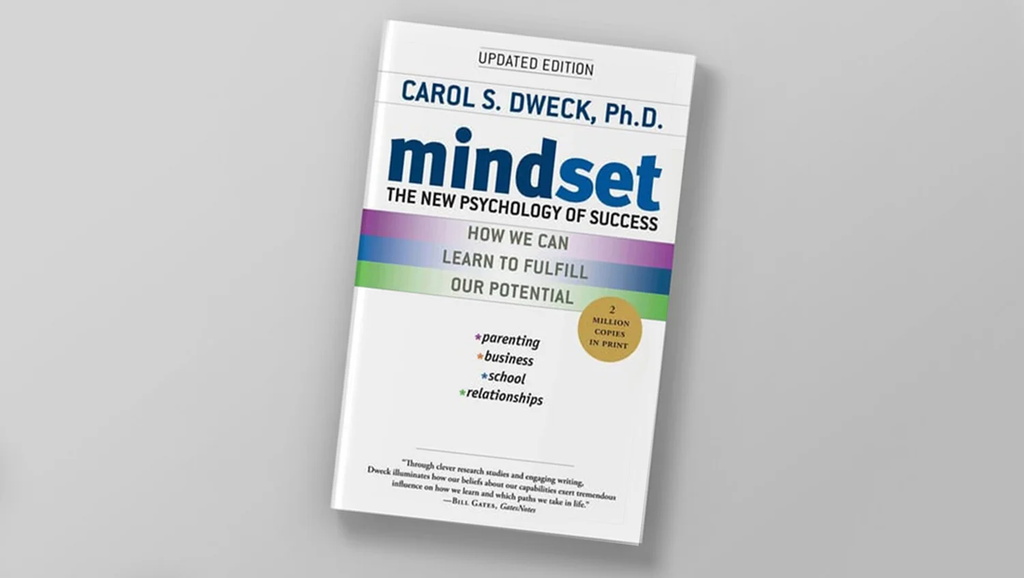
Carol S. Dweck’s Mindset examines how beliefs about ability and intelligence can influence learning, persistence, and responses to challenges. Goodreads currently lists it among major personal-development titles, with more than 182,000 ratings and an average rating around 4.09. The practical value of the book is not that you should repeat “growth mindset” like a motivational password. Its usefulness comes from examining what happens internally when you encounter failure, criticism, or something you cannot immediately do well.
Imagine learning a new skill and being terrible at it for the first month. You could interpret that as evidence that you are “not talented.” Or you could interpret the difficulty as part of the learning process and ask, “What should I practice differently?” Those two reactions can produce very different behaviors. The first may encourage avoidance; the second can encourage experimentation and persistence. That is why this book belongs among personal development books: it focuses on the mental interpretation behind the action, not only the action itself.
A practical exercise is to catch your fixed statements. Instead of saying, “I am bad at public speaking,” try, “I am not comfortable with public speaking yet.” Instead of “I cannot write consistently,” ask, “What system would make writing easier for me?” The goal is not to pretend every problem is easy. It is to create room for improvement.
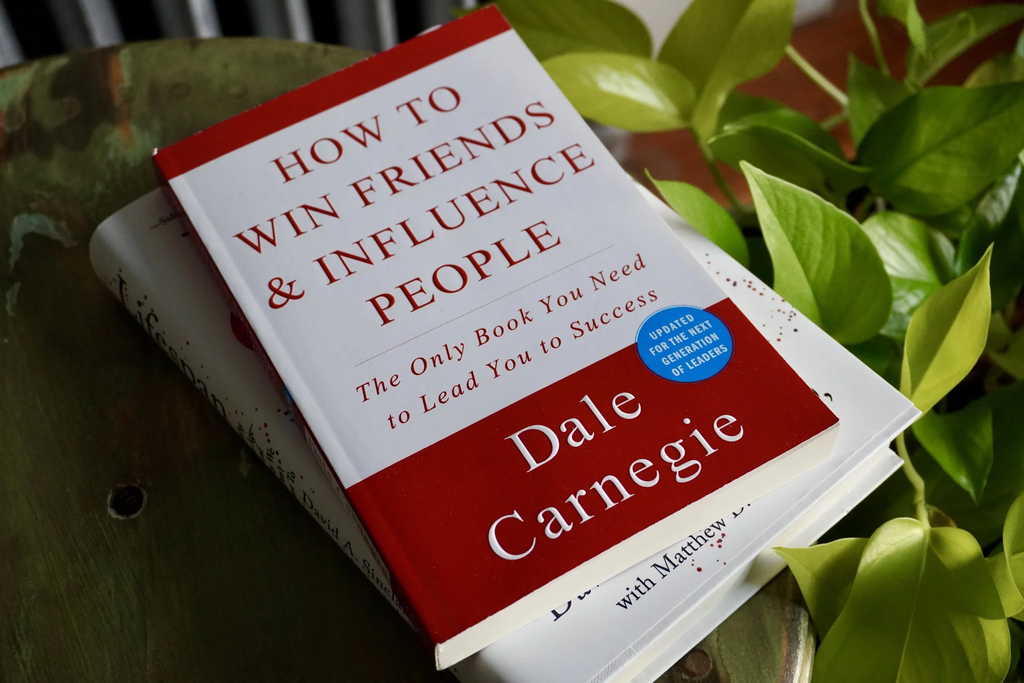
Few books to read have remained as recognizable in the communication category as Dale Carnegie’s How to Win Friends and Influence People. Goodreads currently shows more than 1.19 million ratings for the book and an average rating around 4.21. Originally published in 1936, it has remained part of self-improvement reading lists because human interaction has changed far less than our technology. We still want to be understood. We still dislike being unnecessarily criticized. We still appreciate people who listen instead of waiting impatiently for their turn to speak.
The practical application is especially useful for professionals, entrepreneurs, managers, freelancers, students, and anyone who deals with people regularly. Suppose a client gives you criticism about your work. Your instinct might be to explain immediately why the client is wrong. A more productive response could be to ask what specifically did not meet expectations, listen carefully, and then clarify what can be changed. That does not mean agreeing with everything. It means separating understanding from agreement.
For personal development, communication is one of those skills that compounds quietly. Better listening can improve friendships, client relationships, leadership, networking, teamwork, and even family conversations. You may not notice the change after one conversation, but six months of becoming a better listener can completely alter how people experience you.
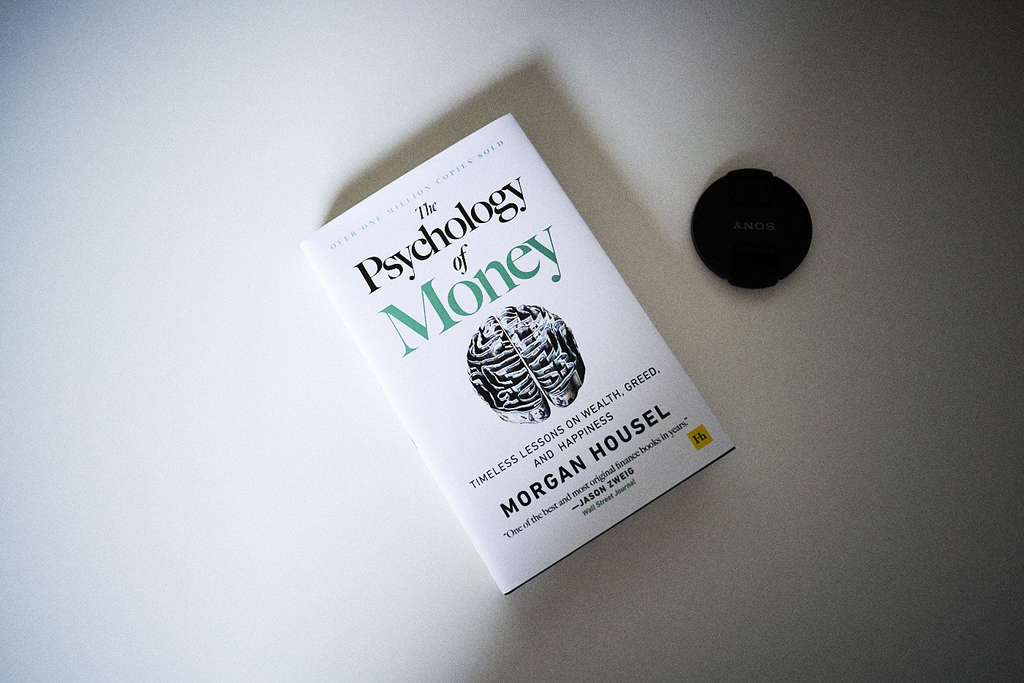
Money is one of the most practical areas of personal development, yet many people approach it as if financial success were purely mathematical. Morgan Housel’s The Psychology of Money takes a different approach by examining the behavior, emotions, experiences, and stories that influence financial decisions. Goodreads currently lists it with an average rating around 4.27 from more than 367,000 ratings. That popularity reflects how strongly the topic resonates with readers who want to understand not just what to do with money, but why people behave strangely around it.
Think about two people earning the same amount. One saves consistently, avoids unnecessary debt, and invests patiently. The other earns the same income but spends whenever stress hits, upgrades everything whenever income rises, and constantly worries about keeping up with others. Their financial outcomes may eventually look very different even though their salaries began at the same level. This is where financial self improvement becomes behavioral rather than purely numerical.
A useful exercise after reading this book is to examine your own money patterns. Do you spend more when you are stressed? Do you avoid looking at your accounts because the information makes you uncomfortable? Do you compare your lifestyle with people whose financial circumstances you do not know? Do you increase spending every time your income increases? Questions like these can reveal the emotional side of money management. The book will not magically make you wealthy, but it can encourage a more thoughtful relationship with financial decisions.
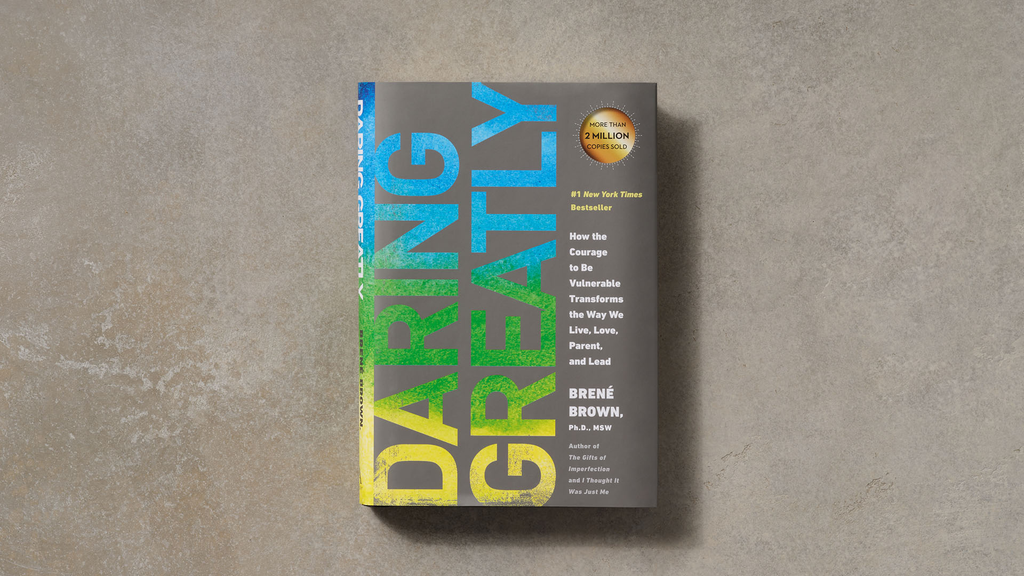
Brené Brown’s Daring Greatly takes the conversation in another direction by focusing on vulnerability, courage, connection, and the fear of being judged. Brown’s official description frames the book around how vulnerability can influence the way people live, love, parent, and lead. This makes it an interesting addition to a list that might otherwise become dominated by productivity, money, and morning routines. After all, becoming more productive while being terrified of making mistakes is not necessarily a complete version of personal growth.
Consider someone who has an excellent business idea but refuses to publish it because strangers might criticize it. Or someone who avoids asking for help because they believe needing help makes them look weak. Or a manager who never admits uncertainty because they think leadership means always having an answer. These situations demonstrate how fear can quietly restrict behavior. Brown’s work provides a framework for examining vulnerability rather than automatically treating it as weakness.
The practical takeaway is not to share every private detail with everyone you meet—that would be an interesting strategy, but probably not a very good one. Instead, learn to distinguish useful vulnerability from oversharing. Admit mistakes when appropriate. Ask for feedback. Say when you do not know something. Start the difficult conversation. Apply courage in situations where perfectionism has been keeping you frozen.
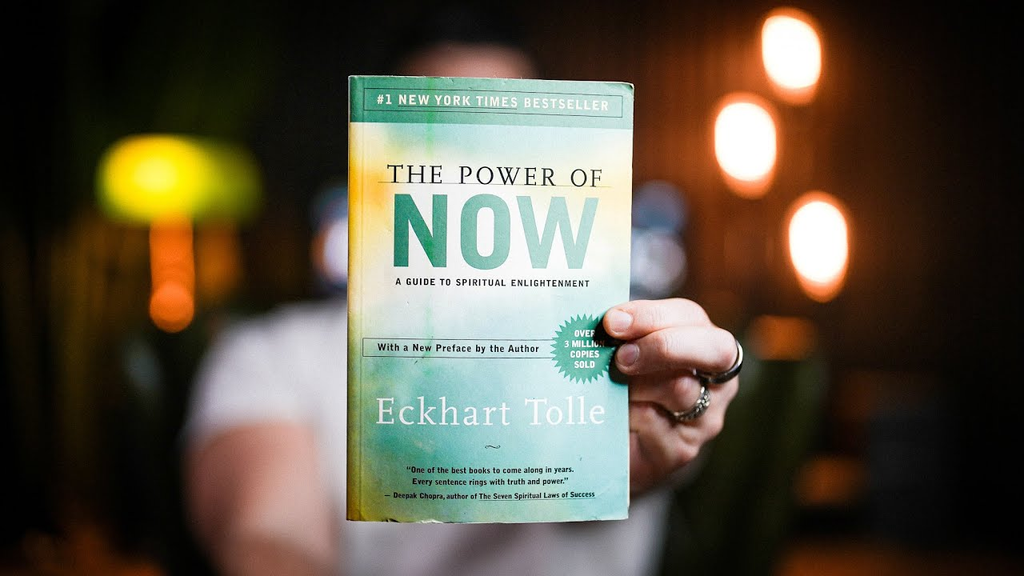
Not every problem requires another productivity system. Sometimes the problem is that your mind refuses to live in the same room as your body. Eckhart Tolle’s The Power of Now focuses on presence, awareness, and the relationship people have with their thoughts. Goodreads currently lists the book among major personal-development titles, with more than 475,000 ratings and an average rating around 4.15.
The practical situation is easy to recognize. You are eating dinner while thinking about tomorrow. You are working while replaying yesterday’s argument. You are on vacation while worrying about next month’s expenses. You finally reach bed and suddenly remember every embarrassing thing you have ever said since 2009. Your body is in the present, but your attention has purchased a season ticket to the past and future.
Reading this book can be useful if your version of personal development has become entirely focused on achievement. Try a simple experiment: for ten minutes, perform one ordinary activity without multitasking. Drink tea without scrolling. Walk without checking your phone. Eat without watching a video. Notice your surroundings. The goal is not to eliminate thoughts; it is to become more aware of where your attention goes.
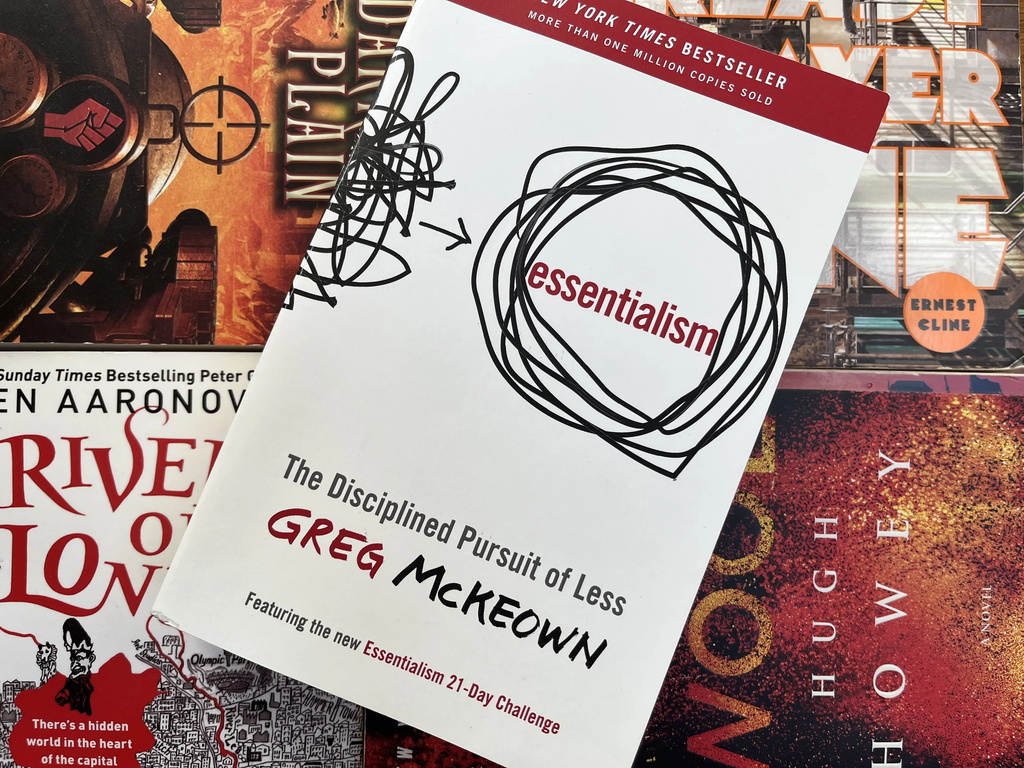
Essentialism is especially relevant for anyone whose life has become a crowded browser window. You know the situation: too many projects, too many commitments, too many notifications, too many people asking for “just five minutes,” and somehow you are expected to remain cheerful throughout the whole circus. Greg McKeown’s book focuses on the disciplined pursuit of less, and Goodreads currently lists it with more than 137,000 ratings and an average rating around 4.05.
The practical lesson is to distinguish what is genuinely important from what merely feels difficult to decline. Suppose you run a small business and have ten possible projects. You cannot realistically give all ten your best attention. Instead of spreading yourself thin, identify the two or three activities most closely connected to your current objective. That might mean saying no to opportunities that sound exciting but do not fit your priorities.
This is one of the personal development books I would consider particularly useful for people who constantly complain that they do not have enough time. Sometimes the problem is not a lack of time. It is an excess of commitments. Your calendar is a budget, and every appointment spends some of it.
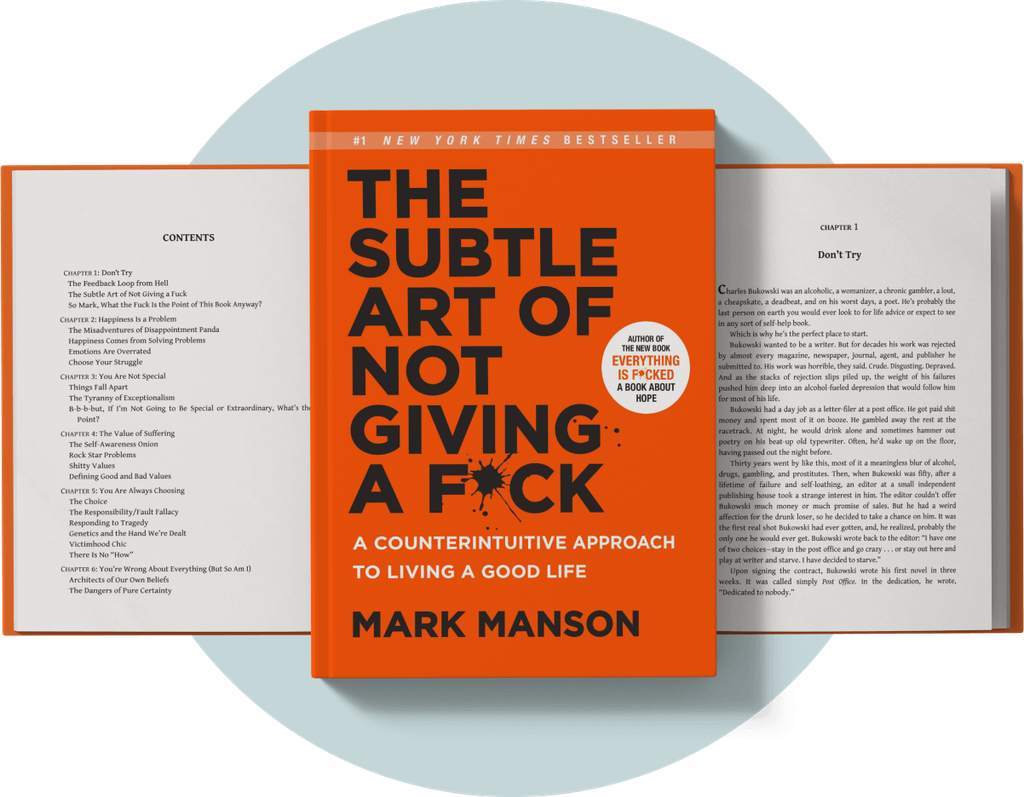
Mark Manson’s The Subtle Art of Not Giving a Fck* brings a deliberately blunt voice to self improvement. Goodreads currently lists it with more than 1.49 million ratings and an average rating around 3.86. The central appeal is its challenge to the idea that a better life means eliminating every negative emotion or becoming permanently positive. Life contains problems. The question is which problems are worth choosing.
That distinction can be surprisingly useful. Imagine you want to build a business. You cannot simultaneously avoid uncertainty, criticism, long hours of learning, failed experiments, and uncomfortable decisions. If you treat every unpleasant experience as evidence that something is wrong, you may quit repeatedly. A more useful question is, “Is this difficulty connected to something I genuinely value?” If the answer is yes, discomfort may simply be part of the price.
The important caveat is that the book’s deliberately provocative tone will not work for everyone. Some readers will enjoy its bluntness; others may prefer a softer approach. That is perfectly fine. Books to read are tools, not personality tests. You are allowed to disagree with an author, take one useful idea, and leave the rest behind.
Reading 10 personal development books in a year sounds impressive, but reading them without applying anything is essentially intellectual window shopping. I would rather read four books carefully and change four behaviors than read 40 books and remember nothing except the color of their covers. After every chapter, write down one idea that matters, one situation where it applies, and one action you can take. This turns the book into a personal workbook. You are no longer asking, “What did the author say?” You are asking, “Where does this appear in my life?”
You can also create a simple reading cycle. Spend 20–30 minutes reading, five minutes taking notes, and five minutes deciding what you will test. At the end of each week, review the notes and remove ideas that you have not actually used. If an idea works, keep it. If it does not work, modify it. If you disagree with it, write down why. That process creates much stronger personal development than endlessly highlighting sentences.
For the first week, choose one book, not five. Read a manageable amount every day and identify the central problem you want to solve. During the second week, begin applying one idea from the book in a real situation. During the third week, measure what changed. Did you focus longer? Did you exercise more consistently? Did you spend less impulsively? Did a conversation improve? During the fourth week, decide whether the system deserves a permanent place in your routine.
You can also use digital tools to support the process. James Clear’s official Atoms app is designed around habit formation, while Clear’s website provides additional habit resources and reading material. Cal Newport’s website is another useful resource for readers interested in focus, digital minimalism, and productivity. The goal is not to download every app available; it is to use technology to support the behavior you are trying to build rather than giving your phone another excuse to steal your afternoon.
You do not necessarily need a physical bookshelf to begin reading personal development books. Many titles are available in paperback, audiobook, and digital formats, depending on the publisher and market. For example, James Clear’s official site confirms Atomic Habits is available in print, ebook, and audiobook formats, while his website also provides additional guides and resources. Brené Brown’s official site provides purchasing options for Daring Greatly, including Kindle and other digital formats.
For discovering additional books to read, Goodreads is useful for exploring reader ratings, shelves, lists, and related titles. Its current personal-development and self-improvement pages can help you discover what readers are currently shelving alongside established classics. For deeper learning, official author websites are often more useful than random quote pages because they can provide interviews, newsletters, workbooks, podcasts, articles, and supplementary material. Just remember one important rule: use legitimate sources for ebooks and avoid pirated copies. Saving a few dollars is not much of a victory if the author who spent years creating the book receives nothing for it.
If you are completely new to personal development, I would not start by trying to conquer this entire list. Choose based on the problem that annoys you most. If you constantly start things and abandon them, Atomic Habits is a logical place to begin. If your days disappear into meetings, notifications, and multitasking, Deep Work or Essentialism may give you more relevant ideas. If your challenge is communication, How to Win Friends and Influence People is an obvious candidate. If money decisions cause recurring problems, The Psychology of Money gives you a different perspective.
If you feel stuck because you are afraid of failure or judgment, consider Daring Greatly or Mindset. If your mind rarely seems quiet, The Power of Now may resonate more than another productivity manual. If you want a broad framework for effectiveness and priorities, The 7 Habits of Highly Effective People is still highly relevant. And if you want a more provocative examination of values and problems, The Subtle Art of Not Giving a Fck* may be worth exploring. The point is not to identify a universally “best” book; it is to identify the book that addresses the problem you are actually experiencing.
A useful starting sequence could therefore look like this:
| Your current problem | Book to consider | Practical focus |
|---|---|---|
| Inconsistent habits | Atomic Habits | Systems and routines |
| Poor prioritization | The 7 Habits of Highly Effective People | Effectiveness and priorities |
| Constant distraction | Deep Work | Focus |
| Fear of failure | Mindset | Learning and beliefs |
| Communication problems | How to Win Friends and Influence People | Relationships |
| Financial behavior | The Psychology of Money | Money psychology |
| Fear of judgment | Daring Greatly | Vulnerability and courage |
| Overthinking the present | The Power of Now | Awareness |
| Too many commitments | Essentialism | Prioritization |
| Struggling with life’s unavoidable problems | The Subtle Art of Not Giving a Fck* | Values and responsibility |
The most valuable lesson I take from personal development books is that you should not read them simply because everyone else is reading them. A book becomes valuable when its ideas help you notice something about your own behavior and then give you a practical way to change it. The current popularity of books such as Atomic Habits, How to Win Friends and Influence People, The 7 Habits of Highly Effective People, Deep Work, and The Psychology of Money shows that readers continue to look for practical answers around habits, relationships, effectiveness, attention, and financial behavior. But popularity should be the beginning of your research, not the end of it.
I would rather see you read one chapter tonight and change one thing tomorrow than buy 10 ebooks and create a beautiful digital library you never open again. Pick the problem. Pick the book. Read slowly enough to understand the idea. Write down what applies to your situation. Then test it in real life. That is where self improvement stops being an attractive phrase and starts becoming a process.
And remember, you do not have to become a completely new person. You may simply need better systems, clearer priorities, stronger habits, healthier boundaries, better attention, or a different way of interpreting setbacks. The best books to read do not live your life for you. They give you another lens through which to examine it. What you do with that lens is ultimately up to you.
1. What are the best personal development books for beginners?
For someone just starting, Atomic Habits, The 7 Habits of Highly Effective People, and How to Win Friends and Influence People are practical starting points because they address habits, effectiveness, and relationships. Goodreads currently lists all three among its prominent personal-development and self-improvement titles, with substantial reader-rating histories. Rather than choosing all three at once, identify the problem you most want to solve and start there.
2. Are personal development books actually useful?
They can be useful when their ideas are applied rather than simply consumed. Research reviewing 43 papers found several pathways through which reading for pleasure can support wellbeing, including relaxation, perspective-taking, intellectual stimulation, self-understanding, empathy, and connectedness. A self-help book should therefore be treated as a source of ideas and tools, not as a guaranteed solution to every personal problem.
3. Should I read physical books or ebooks?
Either format can work. Physical books may be preferable if you enjoy writing notes in the margins and want fewer digital distractions, while ebooks are convenient for travel, search, highlighting, and carrying an entire library on one device. The better format is ultimately the one that makes you more likely to read consistently. Just make sure you obtain digital books through legitimate channels.
4. How many personal development books should I read in a year?
There is no magic number. Reading four books and applying their ideas can be more valuable than reading 50 books without changing anything. I would recommend choosing a realistic reading schedule—perhaps 20–30 minutes a day—and keeping notes about the ideas you actually implement. Your objective should be measurable improvement, not an impressive Goodreads number.
5. Which personal development book should I read first?
Start with the problem that is currently costing you the most time, energy, money, or opportunity. Choose Atomic Habits if consistency is your problem, Deep Work if distraction is your problem, How to Win Friends and Influence People if communication is your challenge, The Psychology of Money if financial behavior is causing difficulties, or Essentialism if you are overwhelmed by too many priorities. The “right” book is therefore highly dependent on what you want to change.

Share your details, and we will get back to you shortly!
This will close in 0 seconds
Share your details, and we will get back to you shortly!
This will close in 0 seconds