Physical Address
304 North Cardinal St.
Dorchester Center, MA 02124
Physical Address
304 North Cardinal St.
Dorchester Center, MA 02124


Initially when learning how to grow businesses, I actually thought that all you needed for successful operation was an awesome product and cool-looking logo. This is far from being true. A company which does not have any marketing strategy can be compared to a shop in a desert. However cool your ideas may be, if your customers do not know about it, there is no business at all.
The world we live today is highly competitive. You are no longer competing with companies in your country but all across the globe. With the help of digital marketing, you can launch your own brand with a laptop. The point is, the attention span is getting shorter, the level of competition is growing and customers are getting smarter. That is why you should not rely on guesses anymore.
This manual is going to explain you everything in a realistic way. It will provide you with numerous examples, information on affiliate marketing, strategies on lead generation, customer psychology, funnel building, math of return on investment and even a roadmap on actions for the next 30, 60, 90 days.
The first mistake I made when starting was to try to target everybody. That seems like a good idea in theory, but it ruins your marketing strategy. Talking to everyone means not talking to anyone.
Your customer persona is basically an imagined customer that you create. Not just their demographics, but also how they think, feel, what their worries are, how much they spend, and even the complaints they make during the night. A small business looking for young entrepreneurs talks very differently from one that looks for corporate clients.
Example Customer Persona Template
When I began creating customer personas, my sales increased almost immediately because my messages got more emotional.

In reality, close to 90% of start-ups end up failing within their first few years, mostly due to inadequate marketing efforts and not because their products were inferior.
For example, if a start-up sells its products online in an e-commerce website and invests most of its money in stocking itself with goods but forgets about marketing through SEO, social media, and email marketing efforts, then there will be no returns from such investments. In three months, there will not even be a sale.
The business owner will lose everything. This happens because the marketing system was absent.
That is why the one that started off small but focused on marketing strategies made it through.
Novices believe people see an ad and buy right away. This never occurs. What actually happens is something like this:
Awareness > Interest > Trust > Conversion > Loyalty
My visualization of the funnel is like this:
Without the marketing funnel, your entire approach becomes meaningless.
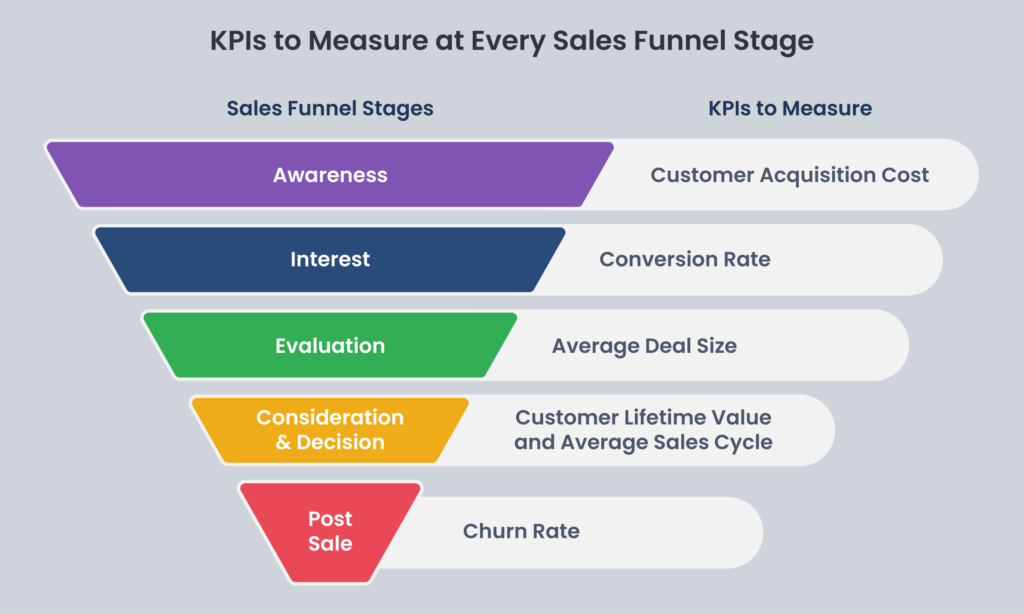
One of the smartest things I learned is how to distribute money properly.
| Area | Percentage | Purpose |
|---|---|---|
| Digital Marketing | 35% | Ads, SEO, social media |
| Content Creation | 20% | Blogs, videos, branding |
| Lead Generation | 20% | Funnels, landing pages |
| Affiliate Marketing | 10% | Partnerships |
| Testing & Tools | 15% | Software, analytics |
This structure helps any small business avoid overspending in one area while ignoring others.
Email remains one of the best ROI tools in digital marketing. I’ve overlooked it for many years – and it turned out to be my biggest blunder.
Example email campaign:
Simple example of an email subject line:
“You’re doing this wrong in your business (I did too)”
Such emails create curiosity and help generate leads, but don’t look like spam.

I’ve made all these marketing mistakes myself:
Silently killing businesses in the early days, these mistakes are extremely expensive. What’s worse – there’s no clue of it until money runs out.
Affiliate marketing may very well be one of the best-kept secrets of digital marketing. Instead of doing sales yourself, let other people do that for you.
Example:
If I sold a $100 item and gave 20% commission, then affiliates would make $20 for each sale. All of a sudden, I have 10 people selling my products instead of only myself.
I am generating leads exponentially without having to pay more for advertising.
The biggest global corporations use the same model as they can scale quickly while keeping risks to a minimum.
If I paid $500 for ads and received $1500 back from them, then my ROI is calculated as follows:
ROI = (Return – Investment) / Investment × 100
ROI = (1500 – 500) / 500 × 100 = 200%
This simple formula allows any small business to evaluate their effectiveness.

Here’s an execution plan that I personally recommend:
First 30 days
Next 60 days
Last 30 days
This roadmap will organize the whole process for you.
| Mistake Approach | Smart Strategy |
| Random posting | Structured content plan |
| No targeting | Customer avatar focus |
| No tracking | ROI-based decisions |
| No funnel | Full sales funnel |
| No affiliates | Affiliate expansion |
This table alone can turn the marketing game of a small business around.
Here’s one of the major lessons that I have learned:
A business with a solid marketing strategy will always win over a business with bigger money, but without a plan.
Money does not matter as much as you think.
One thing in common among all the successful startups across the globe is that they use data. Instead of making assumptions, they measure performance, analyze results, and make informed decisions.
You need to have metrics for your marketing plan. Track your web traffic, conversions, costs per lead, email open and click-through rates, social media activity, etc. Metrics show what works well and what does not work.
I always say that marketing is like driving a car in the dark. Metrics are the headlights. Without headlights, your car can still drive, but there is a much higher risk of mistakes.
Improvement and optimization are what drives growth. Minor tweaks, which are made constantly over time, often result in amazing outcomes. It does not matter whether you are the cleverest. What matters is how fast you can learn and adapt.
Growth rarely comes alone. There is always an underlying network of people behind any successful business. Relationship-building is one of the most effective growth tactics today.
The current networking process is no longer limited to attending meetings and conventions. The internet allows you to participate in online groups, industry forums, and even professional networking sites, offering you a huge number of chances to meet your future clients and partners.
A relationship will be one of the main competitive advantages for a small company. Everybody loves working with businesses they can trust.
Networking requires an entirely different mindset. Do things for others, teach others what you have learned, and add value to other peoples’ lives. Trust forms the basis for the best business relationships.
Creating a successful business is not a matter of luck—it is all about systems. An effective marketing plan along with good digital marketing, organized lead generation, and profitable affiliate marketing will turn a failed startup into a prosperous one.
From my experience, success does not depend on how many things you do but rather on whether you are doing the right things. If you think of marketing as conducting experiments, then your small business will develop much faster than you could ever imagine.
Here is a very important point: companies do not fail due to competition; they fail due to poor value communication.
Understanding your customer and building a clear message around their problems.
It allows low-cost global reach with measurable results.
Yes, because it reduces risk and increases reach through partnerships.
It is the process of attracting potential customers into your system.
Typically 30–90 days depending on strategy and consistency.

Share your details, and we will get back to you shortly!
This will close in 0 seconds
Share your details, and we will get back to you shortly!
This will close in 0 seconds






[…] I Tried Everything Wrong First: 11 Innovative Marketing Strategy Lessons Every Small Business Needs […]