Physical Address
304 North Cardinal St.
Dorchester Center, MA 02124
Physical Address
304 North Cardinal St.
Dorchester Center, MA 02124

Starting a dropshipping store can look ridiculously simple from the outside. You choose a product, add it to your Shopify store, wait for customers, and—hopefully—watch the orders roll in. In reality, there is much more happening behind that attractive storefront. You have to research products, compare suppliers, manage inventory, process orders, track shipments, handle customer questions, and keep your profit margins healthy. That is exactly why choosing the right Shopify dropshipping app can make such a noticeable difference.
I have always found dropshipping interesting because it removes one of the biggest barriers to starting an online business: buying and storing inventory before you know whether anyone actually wants it. Instead, the supplier can handle fulfillment while you focus on marketing, branding, customer experience, and sales. But here is the part beginners sometimes discover a little too late: dropshipping is not completely automatic. An app can automate repetitive work, but it cannot magically turn a weak product into a bestseller. Your strategy still matters.
This guide takes a fresh look at 10 useful dropshipping and product-fulfillment options for Shopify merchants. I have also included an important update that many older articles completely miss: Oberlo is no longer available. Shopify sunset the platform in June 2022, so treating Oberlo as a current Shopify app would be misleading. Instead, I will explain what happened to it and what modern store owners should consider today.
Before installing every shiny app you see in the Shopify App Store, it is worth understanding what you actually need. A good Shopify dropshipping app should reduce repetitive work rather than create another dashboard that you have to babysit every morning. Product importing, supplier management, inventory synchronization, order processing, shipment tracking, and pricing updates are some of the areas where automation can save considerable time. For a beginner, this can be the difference between spending an afternoon improving product pages and spending that same afternoon copying product information from one website to another.
I would also pay close attention to supplier quality and shipping times. A beautiful app interface means very little if your customer receives a product several weeks late or receives something that looks nothing like the product photos. For example, imagine selling a $40 desk organizer and discovering that your supplier charges $18 for the item but another $12 for shipping. Your apparent $22 margin suddenly looks much less impressive. This is why I recommend looking beyond the number of available products and considering product quality, shipping locations, delivery estimates, supplier communication, returns, and actual customer demand.
The best app is therefore not necessarily the one with the largest catalog. It is the one that fits your business model. A store selling fashion products may need different suppliers from a store selling customized mugs, home accessories, beauty products, or electronics. If you are just beginning, keep the setup simple. You do not need 15 integrations, 40 automation rules, and enough software subscriptions to make your credit card cry.
Spocket is one of the better-known options for entrepreneurs who want to discover products from suppliers around the world and connect them with an online store. Its Shopify integration allows merchants to connect their Shopify store and import products, while orders can flow between the systems. Spocket says its platform provides access to thousands of dropshipping suppliers and supports Shopify alongside several other ecommerce platforms.
What I particularly like about the concept is that product sourcing becomes more organized. Instead of manually hunting through dozens of supplier websites, you can explore products through one platform and evaluate potential products before adding them to your store. Spocket also supports product samples, which can be extremely useful. I would strongly recommend ordering samples before advertising a product heavily. You might discover that the product is excellent—or you might discover that the product photography was doing approximately 97% of the work.

Another useful area is synchronization. Spocket’s Shopify integration can sync product information, inventory, orders, and tracking-related information between the systems. For example, if you run a small home-decor store and sell a minimalist lamp, having inventory information synchronized can reduce the risk of selling an item that the supplier no longer has available. That does not eliminate every operational problem, but it can make daily management considerably easier.
For beginners, I would look at Spocket when supplier selection, product discovery, and store integration are priorities. However, do not assume that every product will automatically have excellent margins. Compare supplier pricing, shipping costs, competitor prices, and your advertising expenses before deciding what to sell.
If you have researched dropshipping before, there is a good chance you have seen Oberlo mentioned in older Shopify articles. It was once one of the most recognizable names in the Shopify dropshipping ecosystem and became popular because it helped merchants import products from AliExpress into their stores. Older guides often describe Oberlo as though it is still available, but that information is now outdated.
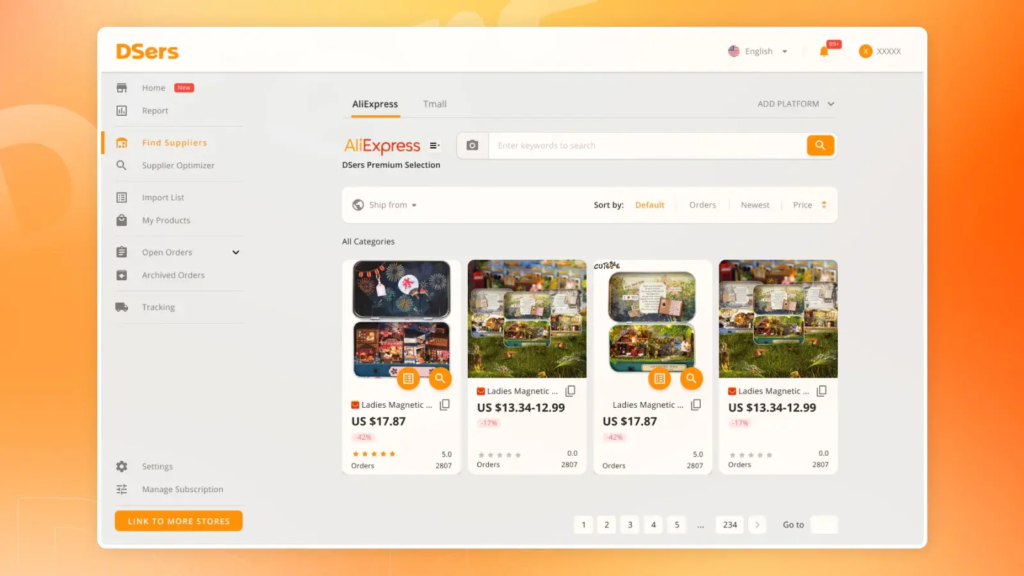
Shopify officially confirmed that Oberlo was sunset, with the last day of access being June 15, 2022. Shopify also directed merchants toward alternatives, including DSers, which had a close AliExpress integration and supported bulk order fulfillment. This is an important distinction for anyone publishing an SEO article about dropshipping because simply copying old lists can leave readers installing software that no longer exists.
I still think Oberlo deserves a place in this article because understanding its history helps explain how Shopify dropshipping evolved. Many entrepreneurs who learned dropshipping several years ago may remember Oberlo as their first product-importing tool. Today, however, a beginner should treat Oberlo as a former solution, not a recommendation.
If you come across an article claiming that Oberlo is one of the best current Shopify apps, check the publication date before trusting it. This is one of those situations where a five-minute fact check can save a beginner from wasting an afternoon searching for a nonexistent app. The lesson is simple: always verify whether an app is currently supported before building your business workflow around it.
AliDropship is another name frequently included in older dropshipping comparisons, but there is an important detail beginners should understand. AliDropship has traditionally been associated with building and managing dropshipping stores using WordPress and WooCommerce rather than functioning simply as a standard Shopify app. Therefore, if your entire business is built around Shopify, you should carefully verify compatibility and the current product offering before assuming AliDropship is the right fit.
That distinction may sound technical, but it matters. Imagine spending several hours designing a Shopify store, installing a collection of Shopify apps, creating product pages, and configuring your checkout—only to discover that the tool you selected is designed around a different ecommerce ecosystem. That is the kind of mistake that makes you stare at your laptop screen and quietly question every decision you made that morning.
AliDropship can still be relevant when comparing different approaches to dropshipping because it demonstrates that the software layer depends heavily on your ecommerce platform. If someone is considering WordPress and WooCommerce instead of Shopify, AliDropship may deserve closer investigation. If the goal is specifically to find a Shopify dropshipping app, however, I would prioritize tools with a clearly supported Shopify integration.
The bigger lesson here is to match the software to your store instead of forcing your store to match the software. Your ecommerce platform, supplier network, product category, fulfillment requirements, and marketing strategy should work together. An app is a tool—not the business itself.
Dropified focuses on product sourcing, importing, fulfillment, and automation for dropshipping businesses. Its current feature set includes tools for sourcing products, adding products to stores, order processing, inventory management, shipping synchronization, product research, and other workflow features. Dropified specifically highlights support for entrepreneurs sourcing from platforms such as AliExpress and eBay.
This type of automation becomes increasingly useful as your order volume grows. Imagine that your store receives two orders per week. Manually processing them may not seem difficult. Now imagine receiving 50 orders in a single day while also answering customer emails, checking advertising performance, creating social media posts, and updating your website. Suddenly, automation is no longer a luxury; it becomes a way to prevent your working day from turning into an endless spreadsheet marathon.
Dropified also offers tools designed around product and order management. Its feature set includes bulk processing, tracking, product listing management, inventory and price synchronization, and product research tools. These features can be particularly useful for merchants who want to manage a larger catalog without manually editing every product.
I would still recommend starting small. Do not import hundreds of products simply because an app makes it easy. A store with 25 carefully selected products can look much more trustworthy than a store with 2,000 random products that appear to have been thrown into Shopify during a caffeine emergency. Focus on products that solve a recognizable problem, have healthy margins, and make sense for your target customer.
While some dropshipping businesses are based on generic products, Printful can work well for entrepreneurs seeking to sell personalized products through print-on-demand. Unlike traditional dropshipping models where one has to buy boxes of shirts, mugs, posters, and other products before selling them, in print-on-demand business, one can design products and get them created once an order from the customer comes in.
For instance, if you are running a website on fitness and have built your own personal brand around home-based exercises, rather than importing any generic fitness products, you can create personalized T-shirts, gym bags, and other such products to create your brand image. The product purchased by your customer becomes personalized through your brand image.
The major advantage here is that customization can give your store a stronger identity. Generic dropshipping often creates a difficult problem: several stores may sell exactly the same product. Branding can help you stand apart. However, customized products usually require thoughtful design, pricing, and marketing. A bad design is still a bad design even when it is printed on a premium hoodie.
For me, print-on-demand is especially appealing for entrepreneurs who already have an audience or a clear niche. If people already follow your content, they may be more interested in merchandise that reflects the community they belong to. It is a different approach to dropshipping, but it can be much more brand-focused.
The last choice is Gooten. Instead of focusing solely on conventional dropshipping products, business can take advantage of print-on-demand options to offer custom goods without buying any inventory upfront.
Imagine an online store that sells custom home decor. Rather than having to order 500 items with some design and hoping to sell all of them, a print-on-demand option would enable the seller to produce designs and goods only when people start buying them.

For a beginner, this method will also make product testing much easier. For example, you can create a couple of designs related to one niche and see which of them gets clicks and purchases, investing in those that actually work. In other words, you give customers an opportunity to determine your product offering strategy.
The important thing is to remember that low inventory risk does not mean zero business risk. You still need attractive designs, accurate product descriptions, competitive prices, reliable fulfillment, good customer service, and marketing. Technology can handle part of the process, but customers still expect a good experience.
Printify is another popular print-on-demand option that can be useful for entrepreneurs interested in customized merchandise. Its model allows merchants to create products around their own designs rather than relying entirely on generic supplier catalogs. This can open the door to niches ranging from clothing and accessories to gifts and home products.
One of the biggest advantages of this approach is creative flexibility. Suppose you have a small website about coffee culture. You could create mugs with original phrases, shirts for coffee enthusiasts, posters for home cafés, or other merchandise built around the same audience. Instead of creating a store that sells unrelated products, you can build a consistent product ecosystem around a particular interest.
I would approach print-on-demand with the same discipline I would use for traditional dropshipping. Research the niche before designing dozens of products. Study competitors. Look at customer reviews. Think about what people actually want to buy rather than what you personally think looks cool at 2 a.m. And always calculate your final profit after production, platform fees, payment processing, shipping, refunds, and marketing costs.
The goal should not be to create the biggest product catalog. The goal should be to create a catalog that feels intentional. Ten products that fit one audience can often make more sense than 100 unrelated products that make your store look like an online garage sale.
Modalyst is another platform associated with dropshipping and supplier discovery. It can be useful for merchants looking to source products from different suppliers and build a more curated catalog. This type of platform can be particularly helpful when your goal is to create a store that feels more like a real brand rather than a collection of products copied from various marketplaces.
Supplier selection matters because the customer ultimately judges your store, not your supplier. If the product arrives late, the customer emails you. If the item is damaged, the customer emails you. If the product looks completely different from the listing, guess who gets the angry message? Exactly. Your supplier may be responsible for fulfillment, but your brand owns the customer relationship.
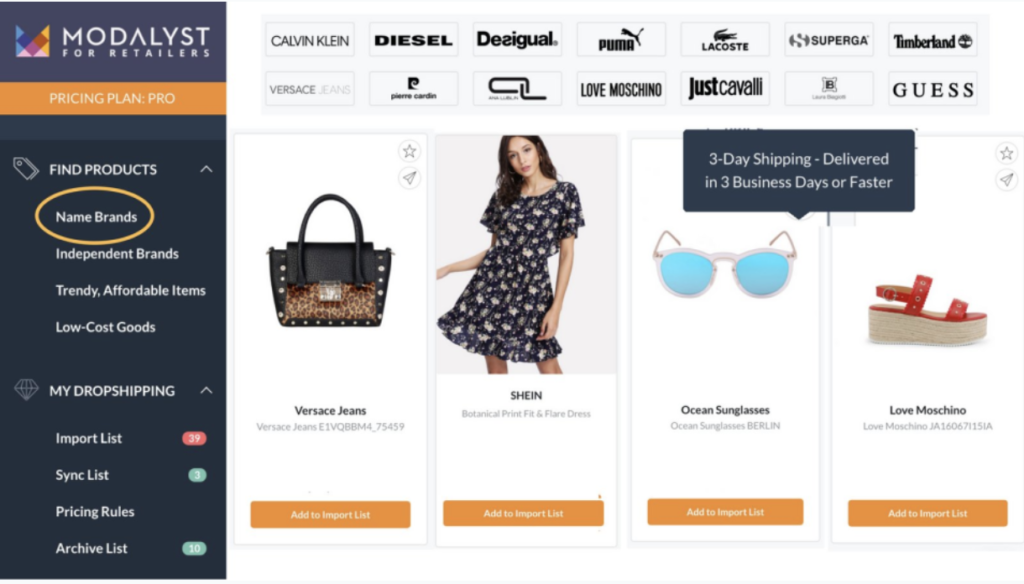
That is why I recommend checking supplier information carefully and, whenever possible, testing products yourself. Read reviews, compare shipping estimates, examine product photographs critically, and investigate return policies. A supplier with slightly higher product costs can sometimes be more valuable if it delivers better quality and more dependable fulfillment.
Modalyst and similar platforms can therefore be viewed as sourcing tools rather than shortcuts to success. They can make finding products easier, but the merchant still has to make the difficult decisions about positioning, pricing, branding, and marketing.
Wholesale2B is another name that has appeared in dropshipping discussions for years. Its general purpose is to connect online retailers with supplier catalogs and help merchants manage products and orders. This type of platform can be attractive when a store owner wants to explore a broader supplier network rather than depending on one source.
Having diversification of suppliers is an option worth considering. Suppose that your store builds up heavy dependence on just one supplier of the product that sells the best. In case this particular supplier increases its prices, gets out of stock, or starts facing fulfillment issues, your store will be negatively affected instantly. Diversification of suppliers or products provides some flexibility.
On the other hand, having more suppliers means having more complications. Each of them can differ from the others in shipping time, return policy, quality, and cost structure. This is why I would advise against expanding the number of suppliers without any real need for this action. Develop your own strategy for dealing with suppliers based on your customer expectations.
For instance, if quick delivery is important for your customers, pay attention to those suppliers who are capable of ensuring it. If the main competitive advantage of your brand is low cost, make comparisons between landed costs carefully. In case your brand is considered premium, quality may become more important than cost reduction.
Megagoods has historically focused on consumer electronics and related products, making it a potentially interesting option for merchants exploring electronics-oriented dropshipping. Electronics can be attractive because consumers regularly search for accessories, gadgets, and practical technology products, but this category also comes with additional risks.
For example, electronics can involve compatibility problems, defective units, warranty questions, batteries, technical specifications, and customer support issues. A customer buying a decorative poster may complain about the color. A customer buying a charging accessory may tell you that it damaged their device. The second conversation is obviously much more stressful.
That means beginners should be especially careful when choosing electronics. Check product specifications, supplier reliability, return policies, compatibility information, and shipping requirements. Do not publish vague descriptions such as “Fast USB Charger” and assume customers will figure out the rest. Give them the information they need to make a safe and informed purchase.
Megagoods can therefore be more relevant to a specific type of store rather than being a universal recommendation. If your niche is electronics, compare it with other suppliers and calculate the complete economics of each product before listing it.
If I were starting a Shopify dropshipping store today, I would not choose an app simply because it appears at the top of a random “best dropshipping apps” list. I would first decide what I actually want to sell. Product category comes first because it determines the type of supplier, fulfillment process, shipping requirements, margins, and customer expectations I need to manage.
Next, I would compare supplier quality and shipping. A product that costs $10 and takes 25 days to arrive may not be a better choice than a $14 product that arrives much faster. Customers have become accustomed to convenient ecommerce experiences, and waiting weeks without clear tracking can quickly turn excitement into frustration.
I would then examine automation. Can the platform import products efficiently? Does it synchronize inventory? How are orders processed? Can tracking information be updated automatically? Does it integrate properly with Shopify? What happens if a product goes out of stock? These questions might sound boring, but boring operational details are often what keep an ecommerce business alive.
Finally, I would look at pricing. An app subscription is not automatically expensive if it saves several hours every week or prevents costly mistakes. At the same time, you should not pay for advanced features that your store does not need. Start with the simplest setup that can support your business and upgrade when your actual workload justifies it.
One of the biggest mistakes beginners make is assuming that a dropshipping app will tell them exactly what product will become successful. Some tools offer product research features, trend information, or supplier data, but no software can guarantee sales.
I would treat product research as a combination of data and common sense. Look at search demand, social media discussions, competitor stores, customer reviews, pricing, shipping costs, and the problems the product solves. A product is usually more interesting when there is a clear reason someone would want it.
For example, consider a compact desk organizer. You might discover that remote workers, students, and home-office users are looking for ways to reduce clutter. That gives you several potential audiences. You could then create content around workspace organization rather than simply running an advertisement saying, “Buy this organizer!”
That difference matters. Successful ecommerce businesses do not merely sell objects; they communicate why those objects are useful. The Shopify dropshipping app handles much of the operational side, while your website, content, branding, and marketing create the reason customers should care.
After looking at all these options, there is one thing I would emphasize: no app can rescue a poorly planned business. You can install Spocket, Dropified, Printful, or another tool and still fail if the product is weak, the website looks untrustworthy, the pricing is unrealistic, or your marketing reaches the wrong people.
Think of your dropshipping technology as the engine of the business. Your product research is the fuel. Your branding is the personality. Your customer service is the relationship. Your marketing is what brings people through the door. If one part is missing, the whole machine becomes harder to operate.
I also would not chase automation for the sake of automation. Automate repetitive tasks, but keep an eye on what is happening. Check your orders. Review supplier performance. Read customer feedback. Test products. Look at your profit margins. Sometimes a five-minute manual check can reveal a problem that an automation system happily ignores because nobody told it to care.
And please remember the lesson from Oberlo: software changes. Apps disappear, platforms evolve, pricing changes, integrations get replaced, and new tools appear. Shopify merchants should periodically review the tools powering their stores instead of assuming that an app they installed two years ago is still the best option today. Oberlo’s shutdown is a perfect example of why outdated dropshipping articles can be dangerous for newcomers.
When you are trying to find the best Shopify dropshipping app, my advice would be to start with understanding your business model and not with finding a single answer to all questions. Spocket could work for you if you need a solution for discovering suppliers and integration with Shopify, whereas Dropified is all about automation and product and order management. In case your business model is based on print-on-demand and customized products, Printful, Gooten, and Printify could be the apps for you.
At the same time, be careful with older recommendations. Oberlo is no longer operating, despite appearing in countless outdated dropshipping articles. AliDropship also needs to be understood in the context of its WordPress/WooCommerce-oriented approach rather than automatically treating it as a standard Shopify solution. That small distinction can save a beginner a lot of unnecessary confusion.
If I had to give one piece of advice to someone starting today, it would be this: start smaller than you think you need to. Choose a niche, research a handful of products, test suppliers, order samples when possible, build useful product pages, and learn how customers respond. Once you have proof that people actually want what you are selling, then add more automation.
Dropshipping is not the magical “make money while sleeping” machine that some social media videos make it sound like. But with the right products, dependable suppliers, sensible automation, good customer service, and a genuinely useful brand, it can become a practical ecommerce model. The right app can remove a lot of boring work—and honestly, anything that saves me from manually copying product descriptions for three hours already has my attention.
What is a Shopify dropshipping app?
A Shopify dropshipping app connects your Shopify store with suppliers or fulfillment services and can help with tasks such as product importing, inventory synchronization, order processing, and shipment tracking. The exact features depend on the platform you choose.
Is Oberlo still available?
No. Shopify sunset Oberlo in June 2022, and it is no longer available for new or existing stores. Shopify directed former Oberlo users toward alternatives such as DSers.
Is Spocket good for beginners?
Spocket can be worth considering for beginners who want a relatively organized way to discover suppliers and connect products with Shopify. Its current documentation confirms Shopify integration and product/order synchronization capabilities.
Is Dropified still useful for dropshipping?
Dropified continues to offer tools for product sourcing, importing, fulfillment, inventory, order management, tracking, and product research. It may be particularly useful for merchants who want more automation as their store grows.
Is AliDropship a Shopify app?
AliDropship is commonly associated with WordPress and WooCommerce dropshipping rather than being treated as a straightforward Shopify app. If you are building specifically on Shopify, verify the current integration and compatibility before choosing it.
Can I make money with a Shopify dropshipping app?
A dropshipping app can reduce operational work, but it does not guarantee profit. Your results depend on product selection, supplier reliability, pricing, marketing, website quality, customer service, and your ability to manage costs.
How many products should a beginner add?
I would start with a small, carefully researched collection rather than hundreds of products. A focused catalog makes it easier to create better product pages, understand your audience, test marketing, and identify which products deserve more attention.
Should I use multiple dropshipping apps?
Not necessarily. Using several apps can increase flexibility, but it can also increase subscription costs, complexity, and the possibility of conflicting processes. Start with the tools you actually need and add another app only when it solves a genuine business problem.

Share your details, and we will get back to you shortly!
This will close in 0 seconds
Share your details, and we will get back to you shortly!
This will close in 0 seconds





[…] These 10 Shopify Dropshipping App Options Could Save You From Costly Mistakes as a Beginner […]
[…] These 10 Shopify Dropshipping App Options Could Save You From Costly Mistakes as a Beginner […]