Physical Address
304 North Cardinal St.
Dorchester Center, MA 02124
Physical Address
304 North Cardinal St.
Dorchester Center, MA 02124


The first thing that comes to mind when considering Shopify careers is not an office job or someone who works from behind the computer or just uploads things onto the online store. Shopify has become such an immense commerce ecosystem with technology, design, marketing, customer experience, analytics, artificial intelligence, and entrepreneurship intersecting each other.
According to Shopify, their platform today serves millions of merchants all over more than 175 countries, while the company itself reached the number of approximately 7,600 employees by the end of 2025. Their merchants earned $378 billion of GMV in 2025. For me, that changes the entire conversation about career opportunities because you don’t necessarily need to become a traditional software engineer to build a career around Shopify.
The interesting part is that the Shopify careers has room for both employees and independent professionals. Someone can work directly for Shopify, join an agency, become a freelancer, build Shopify stores for clients, develop apps, create themes, manage advertising, write product content, provide technical support, or build a specialized consulting business.
Shopify’s current Partner Program highlights multiple earning paths, including apps, themes, store builds, and referrals, and Shopify reported paying partners $1.3 billion during 2025. So, if I were starting today, I wouldn’t ask only, “What job can I get at Shopify?” I would ask a much bigger question: “Which Shopify skill can I turn into a valuable career or business over the next five to ten years?”
It is easy to underestimate Shopify because people often describe it as a tool for creating online stores. That description is technically correct but practically incomplete. Shopify has become commerce infrastructure that connects storefronts, payments, inventory, fulfillment, marketing, customer relationships, analytics, apps, physical retail, and increasingly AI-powered shopping experiences. Shopify itself reports more than 21,000 apps in its App Store, millions of businesses using the platform, and approximately $1.6 trillion in total sales processed through Shopify over its history.
That scale creates an important career opportunity. Every time the platform becomes more sophisticated, merchants need people who understand how to use those capabilities properly. A business owner may know how to sell handmade products but have no idea how to optimize a checkout, improve a theme, connect an ERP, configure analytics, or make a product catalog discoverable through emerging AI shopping channels. That’s where specialists become valuable. In my view, the strongest Shopify careers won’t necessarily belong to people who know every feature on the platform; they’ll belong to people who can solve expensive problems for merchants.
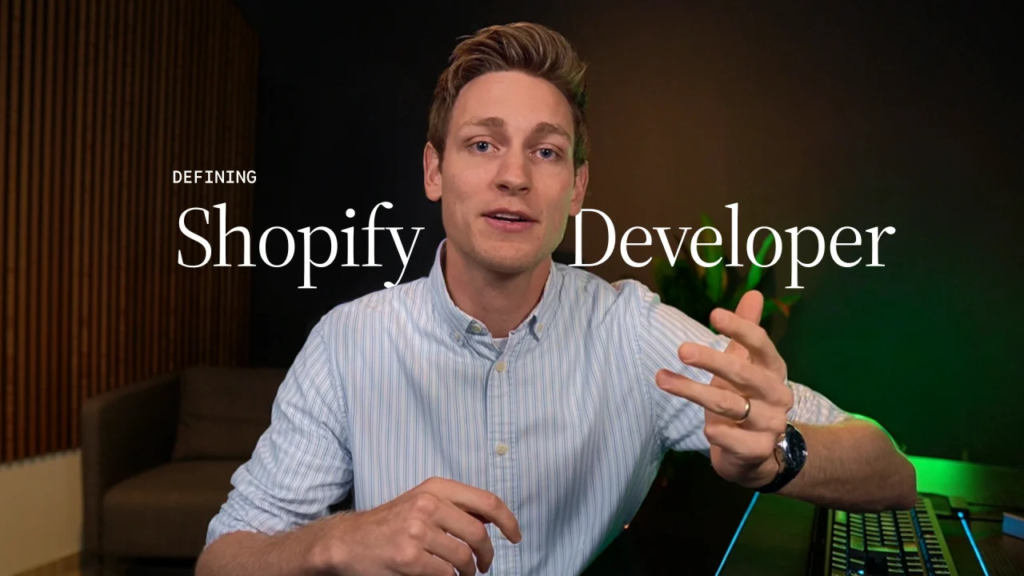
A Shopify developer remains one of the clearest career paths in Shopify careers, but the role has changed considerably. A developer can work with Shopify themes, Liquid, APIs, JavaScript, app integrations, custom functionality, checkout experiences, storefront performance, and headless commerce. Developers may also work with Shopify’s newer development tools and frameworks to create experiences that go far beyond the basic template-and-product-page approach that beginners usually associate with the platform.
The demand becomes particularly interesting when businesses grow. A small merchant might need someone to customize a theme, while a larger company could require sophisticated integrations between Shopify and its inventory, CRM, fulfillment, analytics, or enterprise systems. Shopify’s own engineering careers emphasize software engineering, applied machine learning, infrastructure, security, data engineering, and product data science, demonstrating that the technology opportunities surrounding commerce extend far beyond conventional website development. If I were learning development for Shopify careers in 2026, I’d focus less on memorizing snippets and more on understanding APIs, performance, accessibility, automation, AI-assisted development, and how real businesses operate.
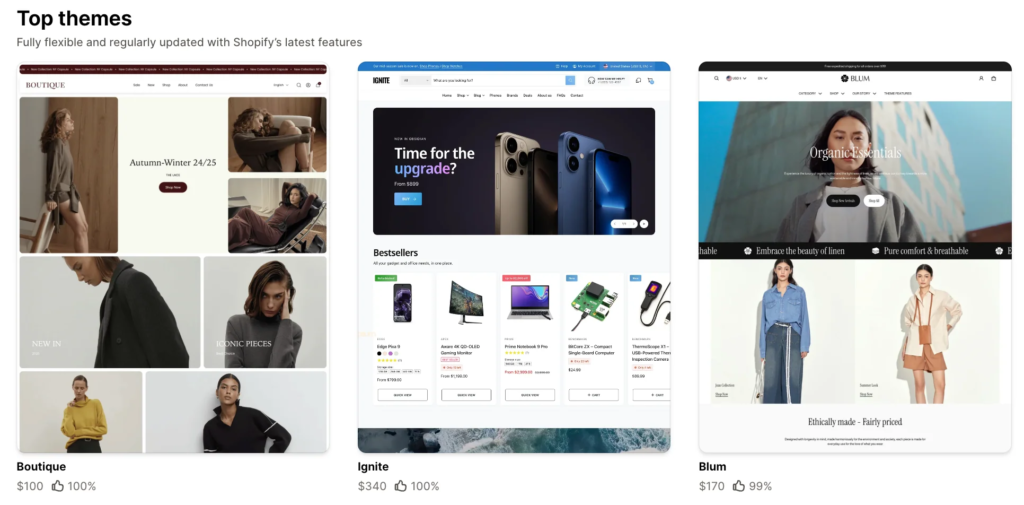
The Shopify Theme Store represents another interesting route for people who enjoy design but don’t necessarily want a traditional agency job. A talented designer can create storefront experiences that are visually appealing, responsive, accessible, fast, and commercially effective. A developer can then turn those designs into flexible themes that merchants can customize for their own brands. Shopify’s Partner Program specifically highlights public themes as one of the ways partners can build and earn revenue.
What makes this career path attractive is that a theme can potentially become a product rather than a one-time service. Instead of designing one website for one client and starting from zero every Monday morning, a professional can build a reusable digital asset that serves multiple merchants. Of course, creating a successful theme requires much more than making something beautiful. The theme has to solve real merchant problems, provide sensible customization options, work well on mobile devices, and keep performance in mind. In other words, a good theme should look good enough to impress a customer but work smart enough to keep the developer from receiving a midnight message saying, “Why did my checkout explode?”
A Shopify marketer sits at the intersection of ecommerce and customer psychology. Their job isn’t simply to post something on Instagram and hope the internet does its mysterious internet thing. They may handle search engine optimization, email marketing, paid advertising, social media campaigns, conversion optimization, product positioning, influencer campaigns, analytics, retention, and customer acquisition. The most valuable marketers understand that traffic is only the beginning; the real objective is turning the right visitors into customers and then giving those customers a reason to return.
This role is becoming even more interesting because the way consumers discover products is changing. In March 2026, Shopify announced that millions of merchants could sell to users through AI-powered shopping channels including ChatGPT, Microsoft Copilot, Google AI Mode, and the Gemini app through its Agentic Storefronts initiative. That means future marketers may need to understand not only Google rankings and social algorithms but also product data, structured information, AI discovery, conversational shopping, and how products are represented to machine-driven shopping systems. If I were building a Shopify marketing career today, I would treat AI visibility as an emerging marketing discipline rather than simply another buzzword.

The Shopify support field deserves more respect than it often receives. Every online store eventually encounters problems: payment issues, shipping configurations, apps that don’t behave, theme conflicts, account questions, product settings, domain problems, customer complaints, and mysterious situations where something worked perfectly yesterday and apparently decided to become philosophical today. Support professionals help merchants understand and solve these problems while keeping the customer experience calm and productive.
Strong support specialists can eventually move into customer success, technical support, implementation, account management, solutions consulting, or product roles. Shopify’s current commercial career structure includes customer success, technical solution engineering, launch services, partner management, and other merchant-facing disciplines. For someone who enjoys troubleshooting and communication more than coding, this can be one of the most practical among Shopify careers to pursue. The key is to combine product knowledge with communication, patience, documentation skills, and enough technical understanding to identify the difference between a genuine platform problem and a merchant who accidentally changed the wrong setting six times.

Not every merchant needs someone to write code. Many need someone who can look at the entire business and say, “Here’s what I would fix first.” That’s where Shopify consultants and ecommerce strategists come in. They can audit storefronts, analyze conversion problems, recommend apps, improve navigation, restructure product pages, review customer journeys, identify SEO opportunities, and create strategies for increasing sales.
This is particularly useful for businesses that have already invested money into Shopify but aren’t getting the results they expected. A consultant can combine technical knowledge with commercial thinking instead of looking at the store as just another website. Shopify’s commercial teams emphasize helping merchants grow over the long term and combining technical ability with market context, which reflects the broader direction of Shopify careers. If I wanted to freelance in this area, I would package the service around outcomes rather than hours—for example, a complete conversion audit, Shopify SEO audit, store-growth strategy, or ecommerce performance review.

Search engine optimization remains a valuable specialization because having a beautiful store doesn’t automatically make people discover it. A Shopify SEO specialist can optimize product titles, descriptions, collection pages, metadata, internal links, site architecture, images, structured data, content, technical performance, and broader search visibility. The job becomes particularly valuable when a merchant has hundreds or thousands of products and needs a scalable system rather than manually editing every page.
The opportunity also extends beyond traditional Google SEO. As shopping discovery moves toward AI assistants and conversational interfaces, product information needs to be accurate, structured, understandable, and easy for systems to interpret. Shopify’s 2026 move into AI shopping channels reinforces how quickly ecommerce discovery is expanding beyond conventional search results. A modern SEO specialist therefore has an opportunity to combine technical SEO, ecommerce content strategy, product-feed optimization, and AI-search visibility. That’s a much more interesting career than simply changing meta descriptions all day.

If building stores is one side of Shopify careers, building tools for merchants is the other. Shopify developers create software that solves specific ecommerce problems, such as subscriptions, inventory management, reviews, customer loyalty, analytics, shipping, personalization, product discovery, or marketing automation. Shopify’s Partner Program actively encourages developers to build apps for buyers, merchants, and POS users across checkout, storefronts, and other parts of the commerce ecosystem.
This career path has an entrepreneurial advantage because developers aren’t limited to selling their time. A useful app can potentially generate recurring revenue from many merchants. That doesn’t mean every app becomes a million-dollar business—if only entrepreneurship worked that conveniently—but it does create a product-based opportunity that traditional freelancing doesn’t always provide. Shopify developers who can identify underserved merchant problems and combine software development with customer research may have an especially strong advantage in the coming years.

A surprisingly useful career path involves words rather than code. Shopify merchants need product descriptions, collection copy, blog posts, landing pages, email campaigns, buying guides, FAQs, ad copy, and brand storytelling. A specialized ecommerce writer understands that writing for an online store is different from writing a general article because every sentence has to contribute to clarity, trust, search visibility, or conversion.
The strongest writers will also learn how products are discovered through AI systems and how structured product information influences shopping experiences. As AI becomes increasingly involved in product discovery, clear and accurate product information becomes even more important. I would therefore position myself not simply as a “Shopify content writer” but as an ecommerce content strategist who understands SEO, conversion copywriting, product data, customer intent, and AI discovery. That positioning makes the service much harder to replace with a generic writing tool.

Getting a customer to buy once is useful; giving them a reason to buy again is where many ecommerce businesses become much stronger. A Shopify email and retention specialist can build welcome sequences, abandoned-cart campaigns, post-purchase emails, product recommendations, win-back campaigns, loyalty campaigns, and personalized customer journeys. This career path combines copywriting, analytics, psychology, automation, and ecommerce strategy.
For freelancers, retention can also be an attractive service because merchants can understand the financial impact more easily. If an improved email sequence increases repeat purchases, the value is measurable. Shopify careers increasingly connects commerce data across the customer journey, making professionals who can interpret that information and turn it into campaigns particularly useful. Instead of selling “five email templates,” a specialist can sell a retention system designed to increase repeat purchases and customer lifetime value.
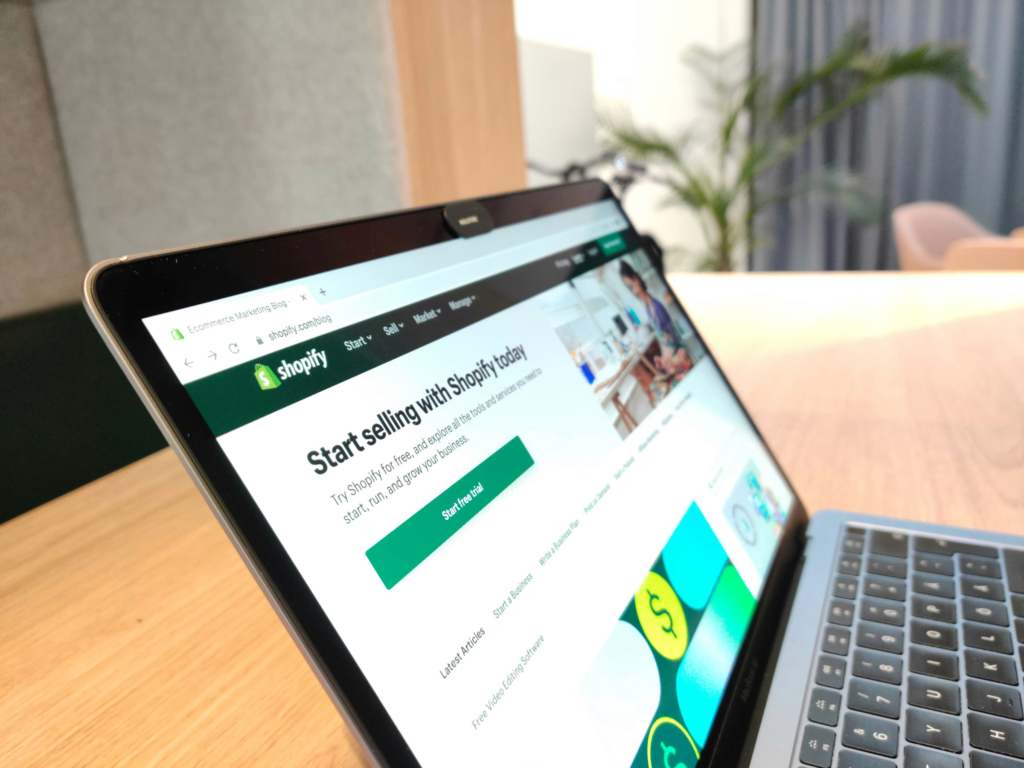
A store can have thousands of visitors and still struggle to make sales. That’s where conversion rate optimization, or CRO, enters the picture. A Shopify CRO specialist studies product pages, navigation, checkout behavior, mobile experience, pricing presentation, calls to action, trust signals, page speed, reviews, and customer journeys to identify where potential buyers are abandoning the purchase.
This career requires a curious mindset because optimization is essentially detective work. You form a hypothesis, examine the data, make a change, and measure the outcome. Sometimes the answer is obvious; sometimes a tiny button, confusing headline, or missing piece of information is quietly costing the merchant money. For me, that’s what makes CRO interesting: you’re not merely making a website “prettier.” You’re trying to remove friction between a customer’s intention and their purchase.
Businesses frequently move between ecommerce platforms, redesign existing stores, change domains, restructure catalogs, or migrate from an older Shopify setup to a more advanced architecture. These projects can become complicated because products, customers, URLs, redirects, metadata, images, collections, apps, analytics, and integrations all need to survive the transition.
There is such a thing as a Shopify migration specialist who can make that mess orderly and controllable. There are services available from freelancers related to platform migrations, design changes, product imports, URL mappings, SEO preservation, analytics configuration, and post-migration testing. Partnering of Shopify creates an ecosystem of agencies and individuals who create stores for clients and migrate them to merchants as complete development stores. For an individual who has technical and SEO skills, this kind of job becomes highly profitable since one error could cost the merchant money and visibility.
Performance and accessibility are more and more becoming relevant to ecommerce. No customer likes to wait while the website is loading and no merchant likes to see people having problems navigating his store. A performance specialist will investigate oversized images, scripts and other technical issues related to the speed and access of the storefront.
Accessibility creates another specialized opportunity. Businesses need online stores that can be used by people with different abilities, devices, and interaction methods. A professional who understands accessibility standards, responsive design, performance, and Shopify theme development can offer a service that goes beyond cosmetic redesign. This is one of those careers that may not sound glamorous when you say it at dinner, but if your optimization helps a merchant improve usability and sales, the merchant probably won’t care that your job title isn’t particularly flashy.
Modern ecommerce businesses generate enormous amounts of information. Orders, customer behavior, advertising performance, product sales, traffic sources, conversion rates, repeat purchases, and inventory data can all tell a story. The problem is that merchants don’t always know how to read that story.
A Shopify analytics specialist turns raw information into decisions. They can build dashboards, analyze customer segments, identify high-performing products, measure marketing channels, investigate conversion drops, and help businesses understand their most valuable customers. Shopify’s current career structure includes data engineering and product data science, while its product teams emphasize real-time performance metrics and analytics-driven decision-making. As ecommerce becomes increasingly automated and AI-assisted, professionals who can distinguish useful signals from piles of meaningless numbers should remain valuable.
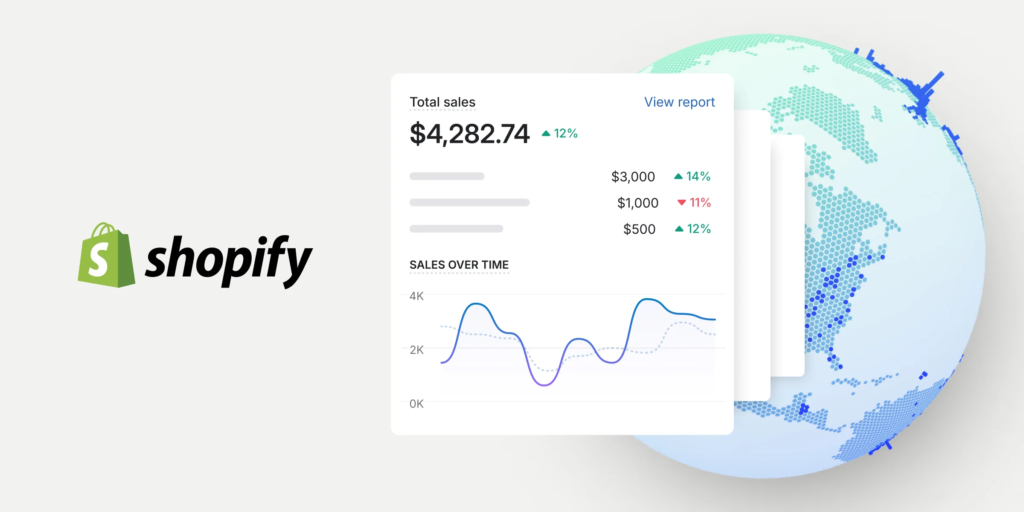
If I had to choose one emerging area to watch closely, it would be AI-powered commerce. Shopify announced in March 2026 that millions of merchants could sell through AI channels including ChatGPT, Microsoft Copilot, Google AI Mode, and Gemini through Agentic Storefronts. That development suggests a future where shoppers don’t always begin by visiting a traditional search engine or opening a store directly. They may simply tell an AI assistant what they want and receive product recommendations inside the conversation.
That creates new work for professionals who understand product catalogs, structured product information, AI discovery, ecommerce SEO, automation, feeds, and conversion experiences. An AI commerce consultant could help brands prepare their catalogs for AI-driven shopping, improve product information, identify opportunities in conversational discovery, and measure how customers interact with emerging channels. It’s still an evolving field, which is precisely why I think it is worth learning early rather than waiting until everyone puts “AI Commerce Expert” on their LinkedIn profile at the same time.
One of the key advantages of Shopify careers is the fact that you do not necessarily need to work directly for Shopify to build a career there. Freelancers may specialize in development, design, SEO, content, marketing, migration, support, CRO, analytics, automation, consultancy, or store management. The Partner Program of Shopify offers a well-established ecosystem of professionals working on applications, themes, stores, and other services, and Shopify claimed that partners earned $1.3 billion during 2025.
In my opinion, the most efficient freelance strategy is specialization. Stating that “I do everything Shopify” sounds nice, but it makes it hard for you to differentiate yourself. “I help fashion brands optimize Shopify conversion rates,” “I create highly-efficient Shopify stores,” or “I handle Shopify SEO for growth-focused ecommerce brands” are much clearer messages about what you offer. After gaining experience in the field, you will be able to move from selling your single tasks to offering packages, retainers, consultancy services, templates, digital products, or even creating your own Shopify applications and themes.

The skills required depend heavily on the path you choose, but the general direction is clear: Shopify professionals need a mixture of technical ability, commercial understanding, communication, and adaptability. A developer should understand modern web technologies and APIs; a marketer should understand analytics and customer behavior; a designer should understand usability and conversion; and a support specialist should understand both the platform and the person using it.
AI literacy should also become part of the toolkit. Shopify itself describes AI as deeply integrated into how its teams build products, while its 2026 commerce initiatives demonstrate that AI is becoming part of the merchant and customer experience as well. I wouldn’t treat AI as a replacement for learning fundamentals. I’d treat it like power tools: incredibly useful when you know what you’re doing, mildly terrifying when you hand it the hammer and walk away.
You don’t necessarily need a decade of experience before starting. A practical approach is to choose one skill, build several realistic projects, document what you did, and use those projects as your portfolio. For example, an aspiring Shopify developer could create a demo fashion store, customize its theme, improve its mobile experience, connect sample integrations, and explain the technical decisions. A marketer could create a mock growth strategy, SEO audit, email funnel, and conversion plan for the same store.
The portfolio should demonstrate problem-solving rather than simply showing screenshots. If I were hiring a freelancer, I would rather see a case study explaining how someone identified a problem, developed a solution, implemented it, and measured the outcome than a gallery containing twenty attractive homepage screenshots. Shopify’s own hiring philosophy emphasizes craft, impact, curiosity, and the problems candidates can solve rather than simply treating resumes as the deciding factor. That lesson applies surprisingly well to freelancing too.
There are two broad directions: working directly with Shopify or building a career inside the wider Shopify careers. Shopify’s official careers site currently lists disciplines including engineering and data, design, product, commercial, communications, finance, and other areas. Its hiring process varies by role but can include an application, recruiter or hiring-manager conversation, craft assessment, interviews, and team placement.
For independent professionals, Shopify careers offers another route. Shopify describes opportunities to build apps, stores, and themes and earn through several revenue streams. Freelancers can also use marketplaces, direct outreach, agencies, LinkedIn, ecommerce communities, referrals, and their own websites to find clients. The important thing is not to chase every opportunity at once. Pick a market, solve a specific problem, create evidence that you can solve it, and let your portfolio do some of the talking.
The numbers suggest that Shopify careers is not standing still. Shopify reported more than $100 billion in GMV during the first quarter of 2026 alone, alongside 34% year-over-year revenue growth for that quarter. At the same time, the company is investing heavily in AI-enabled commerce, partner tools, applications, themes, and merchant infrastructure. These changes mean future Shopify professionals may work on problems that didn’t even have obvious job titles a few years ago.
That is why I wouldn’t approach Shopify careers as a fixed list of job descriptions. Think of them as a moving map. Today you might be a Shopify developer; tomorrow you might specialize in AI commerce integrations. You could start as a support specialist and move into customer success, or begin as a designer and eventually create a successful theme business. The shopify careers rewards people who keep learning because commerce itself keeps changing.
If I were choosing a digital career today, Shopify would definitely deserve a place on my shortlist—not because every Shopify job is easy or guaranteed to pay well, but because the ecosystem connects technology with an enormous and constantly changing commercial market. There are opportunities for developers, designers, marketers, writers, analysts, consultants, support professionals, app creators, theme developers, SEO specialists, CRO experts, and entrepreneurs. Shopify currently says its platform supports millions of businesses across more than 175 countries, while its partner ecosystem provides multiple ways for independent professionals to build and monetize their expertise.
The biggest lesson I take from all of this is simple: don’t limit yourself to searching for a job with “Shopify” written in the title. A Shopify developer, Shopify marketer, Shopify support specialist, Shopify SEO consultant, theme creator, app developer, or ecommerce strategist can build value inside a much larger Shopify careers ecosystem. If you learn a useful skill, understand merchants, build real projects, communicate clearly, and keep adapting to technologies such as AI-powered commerce, you can create a career that grows alongside the platform. And honestly, that’s much more exciting than simply hoping your résumé survives another automated screening system.
1. What are the best Shopify careers for beginners?
Beginners can explore Shopify support, store setup, content writing, SEO, design, marketing, and junior development. The best choice depends on existing skills and whether you prefer technical, creative, analytical, or communication-focused work.
2. Do I need coding skills to build a Shopify career?
No. Coding is valuable for a Shopify developer, but many Shopify careers involve marketing, SEO, design, support, content, analytics, consulting, customer success, and ecommerce strategy.
3. Can I freelance with Shopify in 2026?
Yes. Shopify’s Partner Program supports professionals building apps, themes, stores, and other commerce solutions, while freelancers can also offer specialized services directly to merchants.
4. Is becoming a Shopify developer still worth it?
Yes, particularly if you learn beyond basic theme customization. APIs, modern frontend development, performance, integrations, automation, AI-assisted development, and ecommerce architecture can make a developer much more competitive.
5. What Shopify skill should I learn for the future?
There isn’t one guaranteed winner, but AI commerce, development, analytics, conversion optimization, SEO, automation, and ecommerce strategy are particularly interesting areas to watch as shopping behavior and technology continue to evolve.

Share your details, and we will get back to you shortly!
This will close in 0 seconds
Share your details, and we will get back to you shortly!
This will close in 0 seconds






[…] I Didn’t Know Shopify Careers Could Be This Powerful: 15 Exciting Paths to Build a Future in E-Com… […]